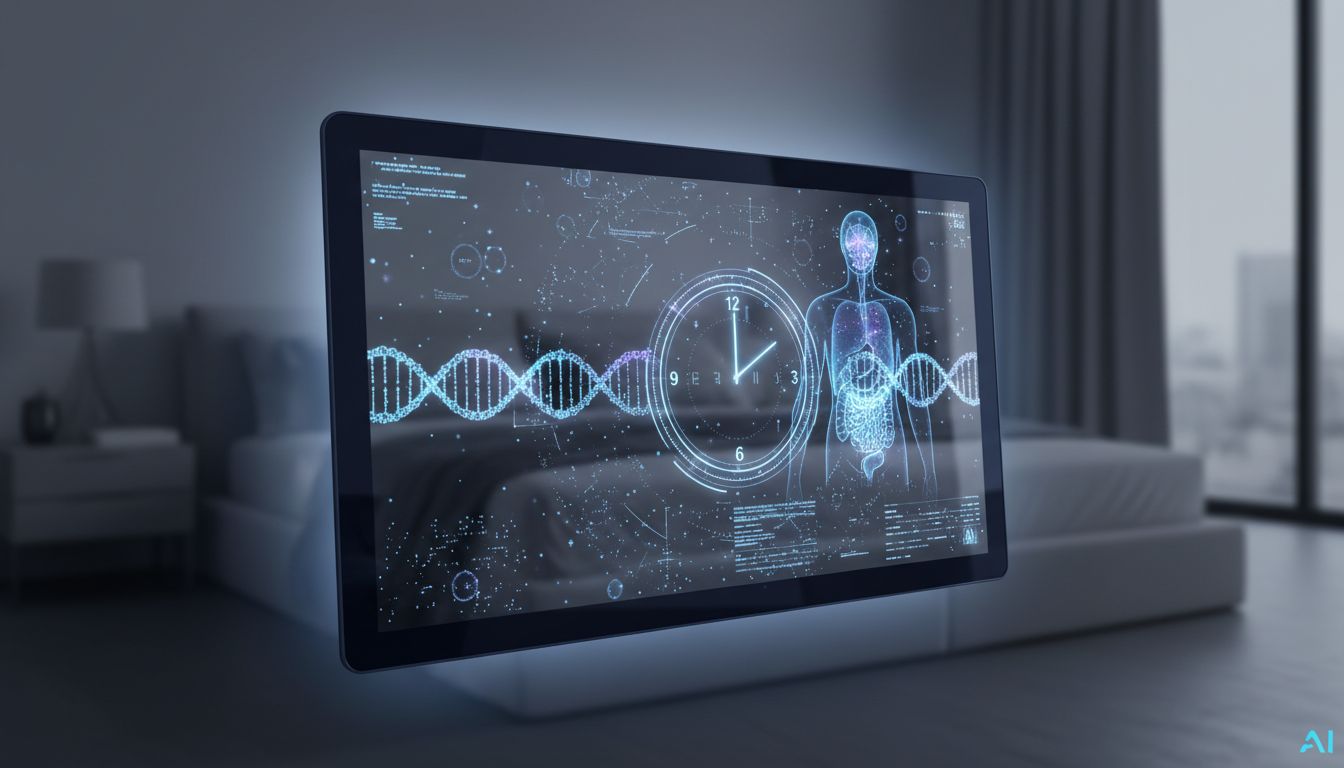

The idea of a mirror that does more than reflect your face used to sound like science fiction. Today, it is starting to look like a real part of home wellness. New AI-powered smart mirrors and at-home biological age tests are bringing health tracking into everyday spaces, from the bathroom to the bedroom, with promises of simple check-ins, personalized insights, and a clearer picture of how your habits may affect your future health.
For readers who want practical ways to care for their bodies and confidence, this trend is both exciting and worth approaching with a balanced mindset. These tools can offer motivation and useful trends, but they are not a replacement for a doctor, blood work, or a full medical evaluation. Used wisely, they may become one more helpful layer in a realistic self-care routine.
Why the smart health mirror is getting attention
One of the biggest recent signals came from CES 2026, where NuraLogix introduced its “Longevity Mirror.” The concept is simple but striking: a full-length smart mirror that uses a short facial video or selfie to estimate long-term wellness trends and future health risk. Instead of only showing your reflection, the mirror aims to turn everyday viewing into a health check-in powered by AI.
This did not appear overnight. NuraLogix had already built a health-monitoring line around its MagicMirror platform, and in March 2025 the company announced a next-generation Anura® MagicMirror™ with 4G connectivity for telehealth, retail, corporate wellness, and smart-home settings. That progression matters because it shows that mirror-based health tracking is evolving from a niche concept into a broader consumer technology category.
Consumer interest is growing beyond one company as well. Withings entered the smart health mirror space with Omnia at CES 2025, presenting a full-size -scanning health mirror that was described as currently in development. Even at the concept stage, products like these show that brands believe people are ready for home devices that blend beauty, convenience, and health monitoring in one familiar object.
What these mirrors are actually trying to measure
Most AI health mirrors are not just trying to tell you whether you look tired. They are built around contactless sensing, meaning they use facial video, computer vision, and pattern analysis to estimate signals related to wellness. In practical terms, the pitch is that a quick scan may help track trends in stress, circulation, recovery, or future risk instead of relying only on how you feel in the moment.
NuraLogix’s messaging around the Longevity Mirror reflects a bigger shift in the market. The question is moving away from “How old are you biologically?” and toward “Where is your health ed?” The company highlighted models trained on large patient datasets to estimate health risks up to 20 years into the future, which makes the product feel less like a simple gadget and more like a forward-looking wellness dashboard.
That future-focused framing can be motivating, especially for people trying to improve sleep, fitness, weight management, or stress habits. If a device helps you notice patterns sooner, it may encourage more consistent healthy behavior. Still, it is important to remember that these estimates are models, not certainties, and they work best as trend tools rather than final answers about your health.
How epigenetic clocks became the science behind biological age
Alongside smart mirrors, epigenetic clocks have become a major part of the home longevity conversation. These tools use DNA methylation patterns to estimate biological age, which is meant to reflect how your is aging compared with your calendar age. When those two numbers differ, the difference is often called the age gap or delta.
Recent scientific coverage has reinforced why this approach gets so much attention. Nature’s explainer published on May 27, 2026 described epigenetic clocks as generally the most accurate and widely used molecular aging clocks. That does not mean they are perfect, but it does explain why so many consumer longevity products now reference epigenetic science when they talk about biological age.
For the average person, the appeal is easy to understand. A lab-style concept that once seemed limited to research settings is now being translated into a score or report you can view at home. That can make health feel more measurable, but it can also make the experience more emotionally loaded, especially if a result seems older than expected. A supportive mindset matters here: a number should guide action, not damage self-esteem.
At-home biological age tests are now a real consumer category
Home testing is no longer just a future idea. Elysium Health markets Index as an at-home biological age test using epigenetic science, and other brands visible in the consumer space include TruMe from ProHealth, Durand Future Health, and NOVOS with AI-trained biological age tools. In other words, aging biomarkers have already moved from specialist labs into direct-to-consumer wellness products.
These tests usually rely on saliva or blood samples collected at home and then analyzed to estimate biological age or related aging markers. Compared with a smart mirror, this approach feels more laboratory-based and less seamless, but it may also feel more concrete to some consumers because it comes from a physical sample. That difference is important: mirrors are largely contactless and convenient, while epigenetic tests ask for more effort in exchange for a different kind of data.
Many of these brands are careful to present their products as trend tools rather than one-time diagnoses. ProHealth, for example, says its at-home TruMe test is based on the epigenetic clock and recommends repeat testing every six months. That advice reflects a practical truth: a single result tells only part of the story, while repeated testing may be more useful for spotting direction and progress.
AI mirrors and epigenetic tests are becoming part of the same wellness category
What makes this moment especially interesting is that two different technologies are starting to serve a similar home-health purpose. On one side, mirror-based systems use facial video and AI to estimate wellness signals without a blood draw or swab. On the other, epigenetic clocks use biological samples to estimate biological age and aging patterns. Both are increasingly being packaged as tools for continuous self-monitoring and personalized wellness.
Some newer products go even further by combining epigenetic markers with AI and lifestyle data. Durand Future Health says its platform analyzes epigenetic markers, cognitive patterns, and wearable data to generate a five- and ten-year prediction. This layered approach fits the broader market trend: companies are trying to offer not just a snapshot of health, but a more dynamic story built from multiple streams of information.
For consumers, this convergence may eventually mean a more connected home wellness experience. A person could use a mirror for regular contactless check-ins, a wearable for daily habits, and a biological age test every few months for deeper trend tracking. That sounds efficient, but it also means learning to interpret lots of data without becoming overwhelmed. Simplicity and perspective are going to be essential.
The benefits of using these tools at home
The biggest advantage of home-based health tools is convenience. When a check-in fits naturally into your day, you are more likely to stay consistent. A mirror scan can happen while getting ready in the morning, and an at-home kit can reduce the friction of scheduling extra appointments. For busy adults trying to build healthy routines, that ease can make self-care feel more doable.
Another benefit is motivation. Many people find it easier to stick with better habits when they can see feedback over time. If you are working on sleep quality, exercise, nutrition, or stress management, a trend-based tool can reinforce that your efforts matter. Even small improvements can feel more rewarding when they show up in a measurable way.
There is also an emotional upside when these tools are used gently and realistically. Home wellness devices can create a sense of agency. Instead of waiting until something feels wrong, you are paying attention earlier and more regularly. That kind of awareness can support confidence, especially when it encourages positive daily choices rather than fear-based monitoring.
The limits, cautions, and questions you should keep in mind
As promising as the smart health mirror and biological age trend may be, scientific caution still matters. Epigenetic clocks are useful aging biomarkers, but consumer products often market predictive insights that are not the same as a medical diagnosis. The same goes for AI mirrors that estimate future risk. These tools may point to patterns, but they do not replace clinical exams, physician advice, or proper testing when symptoms appear.
Privacy is another practical concern. Mirrors that analyze your face and platforms that store biological sample results may collect sensitive health-related information. Before buying, it is wise to check how data is stored, whether it is shared with third parties, and what controls you have over deletion. Convenience should not come at the cost of giving away personal data without understanding the trade-off.
There is also the question of emotional impact. For some people, frequent scoring can become stressful or obsessive rather than helpful. If you know that numbers tend to trigger anxiety or self-criticism, choose tools carefully and set boundaries around how often you check them. Health tracking should support your well-being and self-esteem, not undermine it.
How to use home longevity tools in a healthy, practical way
If you are curious about trying a smart health mirror or an at-home epigenetic test, start with your goal. Do you want motivation to improve habits, a broader sense of wellness trends, or a structured way to track lifestyle changes over time? Knowing your reason helps you avoid buying into hype and choose a product that actually fits your needs.
Next, treat the results as feedback, not judgment. A biological age estimate or an AI wellness score should be a prompt for action, such as walking more, sleeping better, strength training, reducing alcohol, managing stress, or booking a medical checkup when needed. The best use of these tools is not to chase perfect numbers, but to support consistent, realistic improvements in daily life.
Finally, keep your approach simple. Pair any device or test with a few core habits that truly move the needle: nutritious meals, regular movement, restorative sleep, stress care, and preventive medical visits. If a product helps you stay engaged with those basics, it may be worth it. If it adds confusion, guilt, or pressure, it may not be the right fit for your self-care routine.
The rise of the smart health mirror shows how quickly home wellness is changing. With AI tools like NuraLogix’s Longevity Mirror and -scanning concepts like Withings Omnia, the home is becoming a place where people can gather more health information with less effort. At the same time, at-home epigenetic testing is making biological age and aging trends more accessible than ever before.
That does not mean every score is destiny or every prediction is truth. But it does mean consumers have more options to track trends, stay engaged, and build healthier routines with greater awareness. The smartest approach is a balanced one: stay curious, protect your privacy, keep expectations realistic, and use these tools to support your well-being rather than define it.