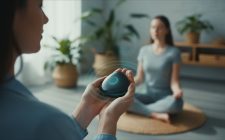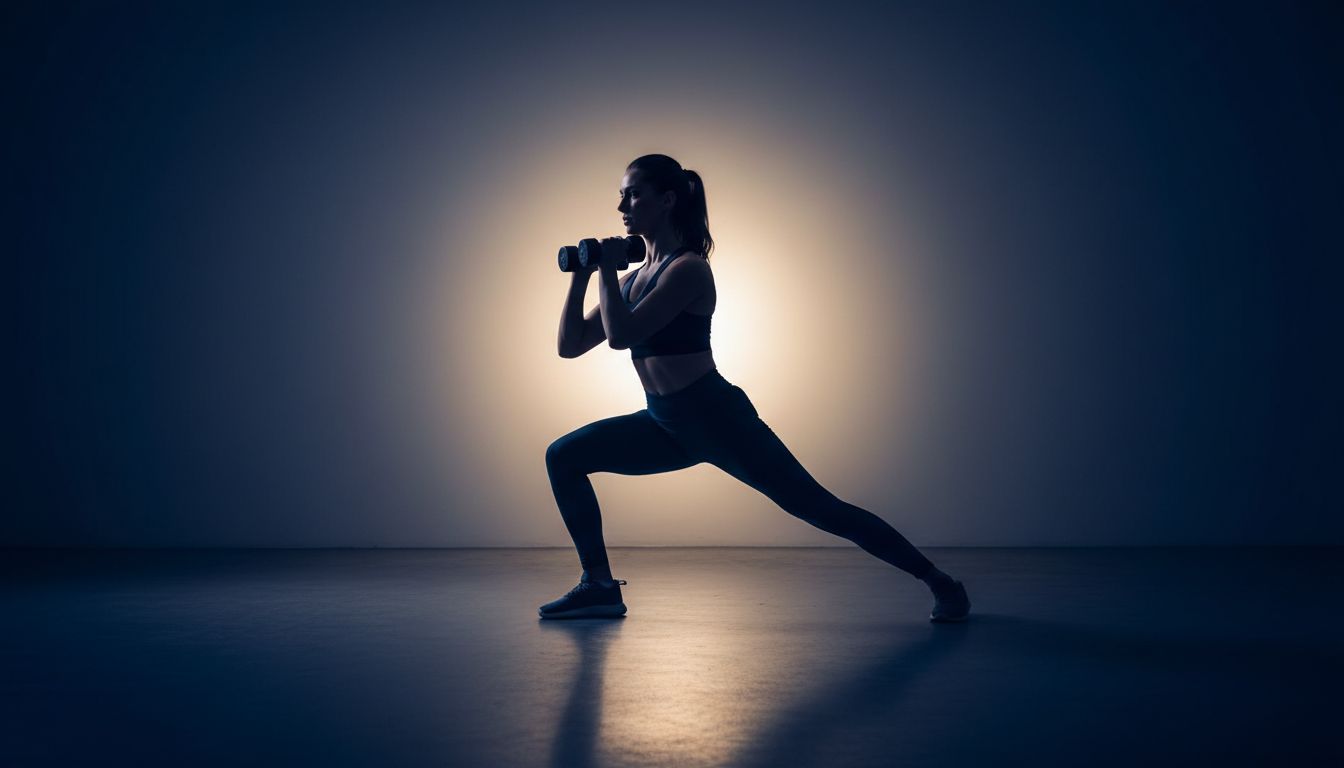

When people lose confidence in their , they often lose something deeper too: the feeling that everyday life is manageable. Standing up from a chair, carrying groceries, climbing stairs, getting down to the floor, or simply feeling steady while walking are not just physical tasks. They are part of everyday agency, the quiet sense that you can do what your life asks of you. That is why short strength sessions and guided movement matter so much. They are not only about fitness. They are about rebuilding control, confidence, and independence in a realistic way.
The good news is that current public-health and exercise science messaging strongly supports a simpler path. The CDC says adults need muscle-strengthening activity on 2 or more days per week and notes that activity can be broken into smaller chunks across the week. HHS now emphasizes that “small changes can add up to big health benefits,” and ACSM’s March 2026 update delivered perhaps the clearest message of all: “Consistency Beats Complexity.” In other words, a short plan you can actually repeat may do more for your life than the perfect workout you never maintain.
Why everyday agency starts with repeatable strength
Agency is the ability to act, respond, and participate in your own life. In practical terms, it means having enough strength, balance, and mobility to handle normal demands without feeling constantly limited or dependent. For many adults, especially during busy seasons, after illness, during aging, or while managing pain and stress, that sense of capability can shrink quietly over time.
This is where resistance training becomes more than a gym concept. A British Journal of Sports Medicine systematic review and meta-analysis linked muscle-strengthening activities with lower risk of cardiovascular disease, total cancer, and all-cause mortality. CDC’s Preventing Chronic Disease journal also summarized pooled evidence showing that participation in any muscle-strengthening activity was associated with a 23% reduction in all-cause mortality risk in 11 cohort studies. That means strength work is not just cosmetic or optional; it is connected to long-term health protection.
Just as important, the newest messaging is refreshingly practical. ACSM’s 2026 update, synthesizing 137 systematic reviews with more than 30,000 participants, emphasized that the biggest gains come from doing any resistance training consistently rather than chasing complicated programming. That fits the real world. If your routine is short enough to start and simple enough to repeat, it is more likely to restore the everyday agency that complicated plans often undermine.
Why short sessions work better for real life than idealized plans
Many adults do not fail exercise plans because they are lazy. They fail because the plan asks too much time, too much energy, too much equipment, or too much mental bandwidth. A routine that looks excellent on paper can still be a poor match for real life. That is one reason short strength sessions deserve more respect: they reduce friction.
The CDC’s guidance supports this approach. Adults should aim for at least 150 minutes of moderate-intensity activity each week plus muscle-strengthening activity on 2 or more days, and the CDC explicitly notes that activity can be broken into smaller chunks across the week. HHS reinforces this with its current Move Your Way message: “small changes can add up to big health benefits!” This removes the old all-or-nothing mindset that has discouraged so many people from getting started.
We also have preference data that point in the same direction. In a 2025 U.S. survey of 611 adults aged 65 and older, 68.4% preferred a daily 5-minute resistance-training program over a traditional 45-minute, three-times-weekly workout. Among adults with difficulty walking, preference for the brief daily option rose to 84.2%. That matters because the format people prefer is often the format they will actually do. And done consistently, a short session can become a daily vote for more capability.
How guided movement turns strength into useful function
Strength alone is valuable, but everyday agency depends on how strength is expressed in real movement. This is where guided movement becomes especially powerful. Guided movement means practicing patterns that resemble real life: standing up and sitting down with control, stepping, reaching, carrying, rotating, balancing, and changing direction. Instead of only building force, you are teaching the to apply force where it matters.
A 2024 randomized study in older adults helps explain this difference. Functional, weighted-vest exercise improved gait speed and Timed Up-and-Go more than traditional machine or free-weight training, while traditional training produced larger gains in maximal strength measures. The takeaway is not that traditional strength work is bad. It is that guided functional movement may transfer better when your goal is to walk more confidently, move faster, and handle daily tasks with less effort.
This is one of the most encouraging ideas in modern fitness: training can be specific to life. If you want to stand up more easily, train standing up. If you want better balance, practice controlled stepping and weight shifts. If you want to carry bags more confidently, include safe loaded carries or carry-like movements. Guided movement builds a bridge between exercise and daily living, which is exactly where agency is either lost or rebuilt.
Confidence grows when movement feels doable
One overlooked benefit of short sessions is psychological. A routine that feels manageable helps people experience success early, and early success builds self-trust. That matters because many people who feel deconditioned or limited are not just lacking strength. They are also carrying fear, hesitation, embarrassment, or the belief that exercise is for other people.
A 2023 pilot study in pre-frail older adults found that short, sporadic muscle-strengthening “exercise snacking” sessions were rated highly acceptable, enjoyable, and low burden. Participants also reported that the approach supported their self-efficacy. That phrase matters. Self-efficacy is the belief that you can do the behavior and keep doing it. In daily life, that belief often comes before bigger physical changes.
Even a few minutes of guided movement can change the story people tell themselves. Instead of “I can’t keep up with exercise,” the message becomes “I can do this today.” Instead of “my is unreliable,” the message becomes “my can learn.” Over time, these small wins often produce more than stronger muscles. They rebuild a sense of ownership over one’s life.
Strength for independence, daily tasks, and disability outcomes
When people talk about independence, they are usually talking about function. Can you get up from a chair without using your arms? Can you climb stairs? Can you carry laundry, open a heavy door, recover your balance, or walk across a parking lot without feeling unstable? These are the outcomes that matter most in ordinary life, and resistance training has meaningful evidence behind it here.
A systematic review and meta-analysis in community-dwelling older adults concluded that improvements in physical function from resistance training could increase independence in activities of daily living for at-risk adults. Another systematic review and meta-analysis found a significant moderate positive effect of resistance training on self-reported disability in older adults with pre-existing functional limitations or disability, based on trials examining ADL and IADL-related outcomes. In simple terms, strength training can improve not just performance in a test, but the felt difficulty of daily life itself.
For adults with disabilities, the connection is even more explicit. The CDC states that physical activity can help support daily living activities and independence, and it includes muscle-strengthening options such as adapted yoga and resistance bands. That official framing is powerful because it treats movement not as a luxury, but as a tool for agency. It also reminds us that guided movement can be adapted, individualized, and still effective.
Why falls, mobility, and lower- control make this urgent
If everyday agency sounds abstract, falls bring the issue into sharp focus. The CDC reports that about 14 million older Americans reported a fall in 2020, and nearly 39,000 people died from unintentional falls in 2021. Its 2025 NCHS Data Brief adds that falls are the leading cause of injury for adults 65 and older, and that the U.S. fall-death rate for adults 65+ reached 69.9 per 100,000 in 2023. This is not a minor quality-of-life issue. It is a major public-health problem.
Guided movement matters here because fall prevention is not only about being “fit.” It is about lower- strength, balance, transitional control, gait quality, reaction, and confidence. CDC’s 2025 falls compendium documents many exercise-based interventions built around strength, balance, and guided practice for community-dwelling older adults. These programs reflect a simple truth: people stay safer when they practice the movements and control strategies that real life demands.
The relevance goes beyond fall statistics. A 2025 systematic review in older adults with sarcopenia found significant improvements in handgrip strength, gait speed, knee extension strength, Timed Up and Go, and five-times sit-to-stand performance after resistance training. Those are exactly the markers tied to rising from a chair, walking safely, carrying items, and moving through the day without excessive effort. Short strength sessions, when done consistently, can support the lower- control and reserve capacity that everyday stability depends on.
Short can still be meaningful, especially when it is targeted
Some people still assume that if a workout is brief, it cannot matter. But several findings challenge that idea. In a randomized clinical trial involving very elderly hospitalized patients, an individualized multicomponent program including low-intensity resistance training over a mean of just 5 days significantly reduced functional decline compared with usual care. That is a striking reminder that short, targeted, guided exercise can produce meaningful results even in very vulnerable settings.
Longer-term evidence also supports the idea of building reserve capacity before function slips away. A 2024 JAMA report found that older adults who completed a year-long intensive strength-training program maintained leg strength over four years, while lower-intensity or no-training groups declined. Agency in daily life is not only about what you can do this month. It is also about what you still have available years from now.
This is why a brief but sustainable routine can be so valuable. It may not look dramatic, but it creates continuity. And continuity is what protects function over time. In a world where WHO reported that 31% of adults worldwide, about 1.8 billion people, did not meet recommended activity levels in 2022, the most useful plan may be the one that feels accessible enough to keep going.
How to build a simple routine that restores control
If you want to use short strength sessions and guided movement to rebuild everyday agency, keep the structure simple. Start with 5 to 15 minutes, two or more days each week, and remember that brief daily sessions can also work well. Choose movements that match daily needs: sit-to-stands, wall or counter push-ups, step-ups, supported squats, band rows, heel raises, marching, carries, and balance practice near a stable surface.
Think in categories rather than perfection. Include one lower- move, one upper- push or pull, one core or posture-focused move, and one guided functional pattern such as standing from a chair, stepping, or controlled reaching. If balance feels like a concern, add a short period of supported single-leg stance, tandem stance, or slow weight shifting. The goal is not to crush a workout. The goal is to make movement feel available again.
To improve adherence, lower the barriers on purpose. Keep a resistance band visible. Use a sturdy chair. Link the session to a daily cue such as after brushing your teeth, after coffee, or before dinner. Track completion with a simple calendar checkmark. This is where the idea of short strength sessions becomes powerful: the easier the routine is to start, the more likely it is to happen, and repeated action is what rebuilds capacity.
It is also wise to tailor intensity to your current level and health status. If you have pain, major balance issues, recent surgery, or a medical condition that affects safe movement, consider guidance from a physical therapist, qualified trainer, or healthcare professional. Guided movement works best when it is specific enough to matter and appropriate enough to repeat confidently.
Short strength sessions and guided movement rebuild everyday agency because they meet people where they actually live. They respect limited time, lower the mental barrier to starting, and focus on capacities that show up immediately in daily life. The research is moving in a clear direction: consistency matters more than complexity, and movement that feels practical is often movement that gets done.
If you have been waiting for the perfect plan, this may be your reminder to choose the possible one instead. Five minutes can be a beginning. Two sessions a week can be a beginning. A few guided repetitions of standing, stepping, carrying, or balancing can be a beginning. And beginnings matter, because each manageable session is not just exercise. It is a small act of self-trust that can help you reclaim more control over your , your routine, and your life.