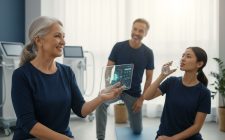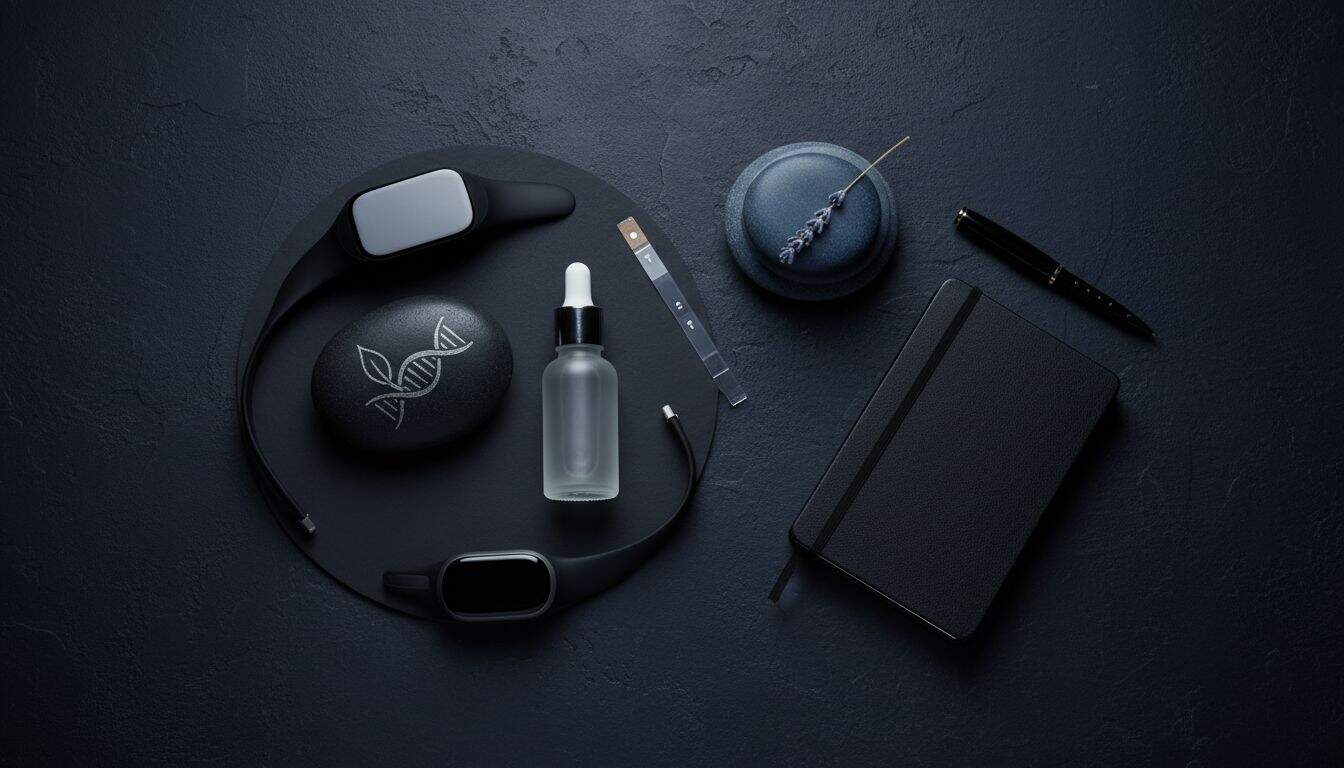

We live in an era where our skin, sleep and glucose don’t have to exist in separate silos. Small sensors, smart watches and continuous glucose monitors (CGMs) are starting to talk to each other, and that conversation can be turned into simple, actionable nudges for daily self-care. Whether you want clearer skin, steadier energy or better sleep, new tools can help you spot personal patterns rather than relying on one-size-fits-all rules.
This article walks through the real progress,what’s clinically cleared today, what’s promising in the lab, and how to use these insights safely. My goal is to give friendly, practical guidance so you can try things that are ready now and treat the experimental tech with curiosity and caution.
Why connected sensing changes self-care
Historically we tracked one metric at a time: sleep hours, a glucose number, or a skin cream’s effect. The biggest shift now is that devices and data streams are being combined to show how those metrics interact in real life. For example, a restless night can cause higher post-meal glucose spikes for some people,and seeing both signals together makes it easier to act.
Integrated measurements create personalized digital biomarkers. Instead of generic advice like “sleep more” or “avoid carbs,” connected data helps you discover your own triggers: which meals spike your glucose when you slept poorly, or whether a flare in skin redness aligns with poor sleep or a late-night snack.
That matters because behavior change is easier when recommendations feel specific and relevant. Smart tests that combine sleep, skin/physiology and glucose can deliver nudges that match your daily life,timing for exercise, tweaks to meal composition, or a reminder to follow up with a clinician.
Sleep screening and at-home diagnostic advances
Sleep monitoring has moved from lab-only studies to consumer-friendly screening. Apple Watch now includes an FDA-cleared sleep-apnea notification feature that “an over-the-counter software-only … mobile medical application that analyzes Apple Watch sensor data to identify patterns of breathing disturbances suggestive of moderate to severe sleep apnea.” That puts wrist wearables into routine screening for breathing disturbances during sleep.
At the same time, a new generation of patch-style and fore/chest home sleep tests have received FDA clearances in 2023,2025 (for example, devices from Compumedics/Somfit, Huxley SANSA, and Snap Diagnostics). These move diagnostic-grade signals out of sleep labs and into simple at-home patches, making confirmation testing more convenient for many people.
The public-health stakes are high: roughly 30 million Americans have clinically meaningful sleep apnea, many undiagnosed. Screening features in consumer wearables are not a diagnosis,but they can prompt timely clinical follow-up, which is exactly the public-health opportunity these tools aim to unlock.
CGM: from alarms to personalized daily guidance
Continuous glucose monitoring has also evolved beyond alerting people with diabetes to low or high numbers. Dexcom’s G7 family continues rapid regulatory expansion,recently gaining FDA clearance for extended-wear 15-day sensors,and the company released integrations such as Smart Basal, an FDA-cleared CGM-integrated basal insulin dosing optimizer for some adults with type 2 diabetes. These moves emphasize using CGM data for personalized medication and daily-care guidance.
Beyond people on insulin, clinical research supports CGM for broader metabolic insight. The Weizmann Institute’s work on “personalized glycemic responses” and follow-up randomized trials show large inter-individual variability in postprandial glucose. Algorithm-driven, personalized diet approaches that use CGM data have changed glycemic variability and metabolic outcomes in trials, suggesting CGMs can help tune diet and timing for many people.
That said, CGM accuracy and safety matter. High-profile device actions,like the FDA classifying certain Abbott FreeStyle Libre 3 sensor issues as a Class I recall/early alert,remind us that sensor errors can cause serious harm. Use cleared systems, pay attention to official safety communications, and loop clinicians into medication decisions.
Skin and sweat sensing: exciting but still emerging
There’s growing research into epidermal and sweat biosensing for real-time metabolite detection, including glucose. Recent prototype patches use electrochemical, optical and microfluidic methods, and advances like NFC-enabled patches, plasmonic nanostructures and hydrogel multifunctional patches are appearing in preprints and early clinical tests.
These reports are promising,showing that non‑invasive continuous monitoring might be possible someday,but important technical and regulatory gaps remain. Sweat glucose must be calibrated to blood or interstitial glucose; signal interference, variable sweat rates, and motion artifacts complicate interpretation. Most results today come from benchtop work, animal studies, or very small human tests.
In short: treat skin and sweat sensors as experimental tools. They point to a future where non‑invasive sensing augments or complements CGM, but they are not yet a drop-in replacement for validated blood or interstitial sensors in clinical decision-making.
Multimodal sensing and machine learning: how the pieces fit
Combining multiple signals,sleep stages, heart rate variability (HRV), skin conductance (GSR), temperature and glucose,lets machine learning models detect subtler events. Recent preprints show ML pipelines using GSR+HR+HRV can detect hypoglycemia events with promising accuracy, and other studies link sleep and activity patterns to glucose trends.
Commercial integrations are following the science. A notable example: Dexcom’s $75M investment and partnership with ŌURA (announced Nov 2024). As Dexcom put it, “This powerful combination will attract new shared customers who want to better understand the link between activity, sleep, nutrition and their glucose.” These partnerships let users correlate ring biometrics and sleep stages with CGM trends,practical for identifying person-specific triggers.
While multimodal ML is promising, most models and prototypes are not yet validated for clinical decisions. They can generate useful hypotheses (“poor REM sleep often precedes your noon glucose spikes”), but clinical confirmation is still important before changing medications or making high-stakes treatment choices.
Practical ways to use smart tests for daily self-care
Start with clinically cleared tools. If you want reliable screening or management data, use FDA-cleared wearables and CGMs and share the outputs with your clinician. Sleep‑apnea notifications on an Apple Watch or an FDA-cleared at‑home sleep patch can prompt a formal diagnostic pathway; CGM data from a cleared device can guide dietary and activity experiments under provider supervision.
Combine trends, not isolated numbers. Look at CGM patterns alongside sleep and activity: do glucose spikes follow nights with short or fragmented sleep? Do late-night carbs create bigger morning rebounds on days you skip movement? Small experiments,change dinner timing, swap a carbohydrate, or prioritize sleep,can show what works for you without major lifestyle upheaval.
Treat experimental sensors and ML tools as advanced trackers, not therapy substitutes. Sweat/gluing‑on skin sensors and non‑invasive ML hypoglycemia detectors are worth watching and trying in low-risk contexts, but wait for larger clinical validation and regulatory clearances before using them to dose insulin or make other high‑risk decisions.
Safety, limits and how to work with clinicians
Accuracy and regulatory status matter. The Libre‑3 safety action is a clear example: sensor inaccuracies can cause real harms. Always verify device accuracy, read manufacturer alerts, and register devices so you receive recall notices or safety communications.
Remember that screening features are not diagnoses. Consumer sleep alerts and wearable notifications are useful prompts, but follow-up testing and clinical interpretation are needed. If a wearable flags possible sleep apnea or persistent high glucose patterns, schedule a conversation with your primary care clinician or a sleep specialist to confirm and design a treatment plan.
Keep a human in the loop for medication changes. Even when tools like Smart Basal exist, medication and basal insulin decisions should be made with clinician oversight. Use smart tests to prepare data-driven conversations with your provider, not to self-prescribe or self-adjust medication without guidance.
Choosing products and next steps
If you’re shopping for tools, prioritize devices with FDA clearance for their intended use and good customer support. For sleep screening, look for watches or home tests that are explicit about being screening tools and have pathways to clinical confirmation. For glucose, choose established CGM brands and investigate extended-wear options if convenience matters.
Experiment methodically. Keep a simple log when you change one variable at a time,sleep duration, dinner timing, a new workout routine,and watch how integrated metrics respond over a week or two. These small, repeatable tests yield clearer personal insights than trying too many changes at once.
Finally, be curious but cautious about shiny new patches and ML apps. Follow the research, but prefer validated devices for decisions that affect health outcomes. Use emerging tools to learn more about your , and bring those findings into shared decision-making with your clinician.
Smart tests that connect skin, sleep and glucose are already useful: they make invisible links visible and give you personalized starting points for change. The technology is advancing quickly, with FDA-cleared sleep notifications, expanded CGM approvals, and integrations that help translate data into daily nudges.
At the same time, safety and validation matter. Use cleared devices, treat experimental biosensors with caution, and partner with your healthcare provider for diagnosis and medication decisions. With a balanced approach you can harness these connected tools to boost well‑being, confidence and sustainable self‑care.