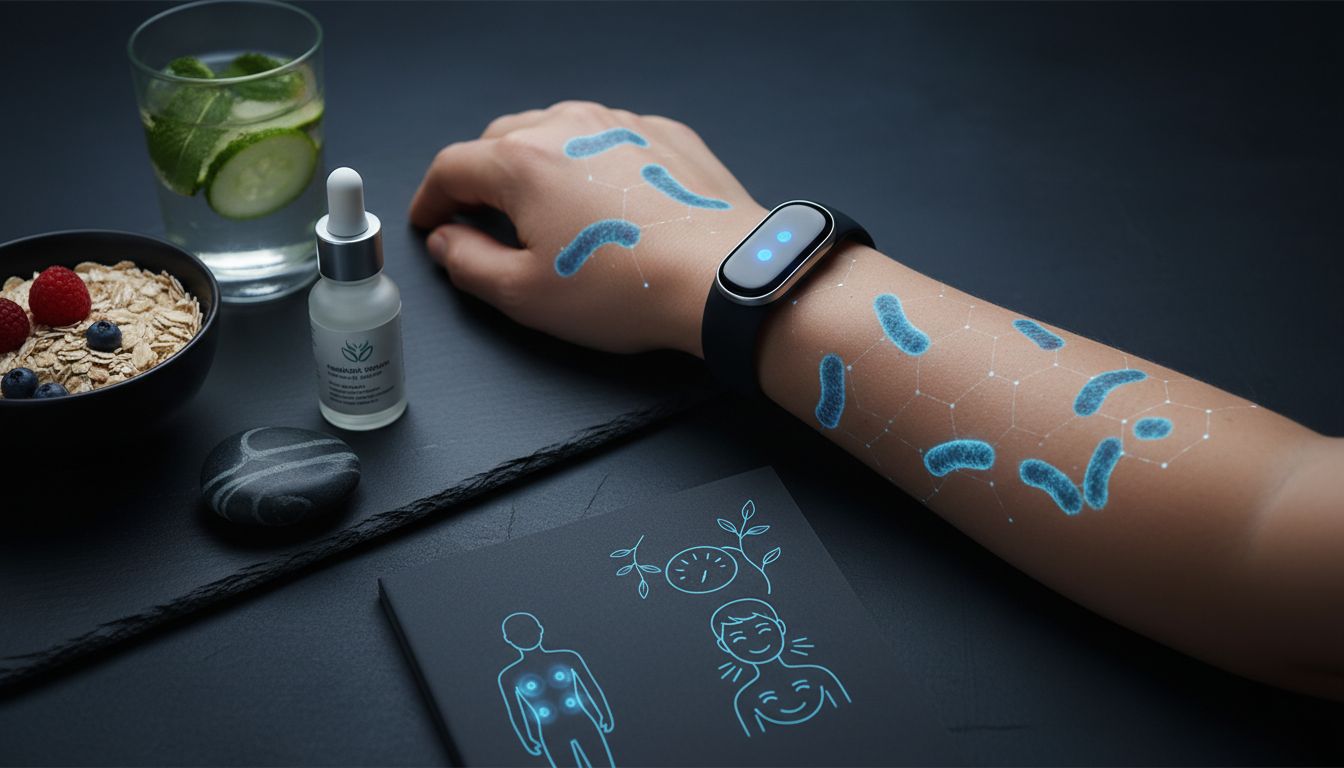

Every morning we make small choices,what to wash with, what to moisturize, whether to check our devices,that shape our skin and how we feel. The intersection of skin microbiome science and smart wearables is turning those everyday choices into data-informed habits, helping people personalize care in practical ways that boost skin health and confidence.
If you want simple, actionable tips that fit into daily life, this article unpacks the latest science and consumer tech so you can make better choices about products and devices. We’ll highlight how research,from metagenomics to wearable sweat sensors,is changing the way we think about routine skincare and self-care.
From cataloging microbes to designing therapies
Twenty years ago, skin microbiome studies mainly answered the question “what lives on skin?”. Today the field is moving into strain-level, metagenomic territory. A 2025 Nature Reviews Microbiology review even framed this shift as “The skin microbiome: from metagenomes to therapeutics,” showing how researchers can now reconstruct species, strains, and gene pathways across populations to identify targets for treatment and prevention.
That matters for everyday care because strain-level differences often explain why one person tolerates a product while another reacts. Metagenomic tools make it possible to identify microbial genes tied to inflammation, barrier health, or odor, which in turn can guide formulation choices or targeted interventions.
For you, this means the future of skincare is less guesswork and more precision. Instead of one-size-fits-all creams, expect solutions that address your skin’s unique microbial and genetic signature,helping you feel more confident in daily routines.
Personalized and bioengineered skincare: trends you can use
Skincare labeled “microbiome-friendly” is evolving beyond simple probiotics and prebiotics. A 2025 review in Cosmetics explains the move toward bioengineering, synthetic biology, and personalization,think formulations designed for your skin’s strains and pathways instead of generic marketing claims.
Practically, that means product labels will increasingly highlight specific microbial or metabolic targets and sustainability features. Look for brands that explain the science behind their claims, offer patch testing, or provide returns if your skin doesn’t respond well.
As a shopper, prioritize transparency and try small, controlled changes: introduce one new product at a time, patch test, and track outcomes. Personalized skin care doesn’t have to be complicated,simple, consistent steps supported by good data are the most effective.
Wearables: turning skin signals into daily insights
Wearables are no longer just fitness gadgets. A 2026 review calls devices like the Apple Watch, Fitbit, Oura Ring, and others “biosensing tools” that span cardiac, sleep, metabolic, and wellness monitoring. Reviewers of skin-integrated wearable electronics note that “Wearable electronics that intimately integrate with the human are driving a paradigm shift in personalized healthcare.”
For daily care, this shift means your watch or adhesive patch can passively collect skin-level signals,heart rate variability, temperature, hydration, or biochemical markers,so you and your health apps get continuous context instead of isolated measurements from clinic visits.
That continuous data can inform simple routines: adjust evening skincare when devices flag poor sleep, tweak hydration when sensors detect sweat-related changes, or consult your clinician earlier when trends suggest a concern. The aim is practical, preventive action rather than alarmist overreaction.
Sweat and microneedles: practical ways to measure skin health
Sweat is emerging as a convenient, non-invasive biofluid for everyday monitoring. Recent papers (2025,2026) describe wax-printed and regenerable wireless sweat sensors designed for long-term use, showing how sweat can carry biochemical signals relevant to health, exercise, and recovery.
At the same time, minimally invasive platforms like microneedle sensors are bringing clinically useful skin-level monitoring closer to home. UCLA reported in April 2026 that microneedle sensors can support continuous monitoring that may personalize dosing and detect early organ dysfunction,an example of how clinic-grade insight can be moved into daily life.
For daily care, these technologies mean more actionable feedback: products and routines can be adjusted based on real-time signals instead of anecdotes. If you choose wearable sensors, prefer devices designed for comfort, validated for real-world use, and with clear privacy policies for your health data.
How skin microbiome science and wearables converge on chronic conditions
Researchers are starting to combine microbiome profiling with continuous sensing to manage chronic conditions. For example, 2026 work has explored wearable perspiration sensing for ongoing inflammation tracking in inflammatory bowel disease, showing the potential to monitor systemic issues from skin-adjacent signals.
Clinical studies are also linking skin microbiome profiles to wound healing and re-epithelialization, suggesting that targeted microbiome interventions plus monitoring could speed recovery and reduce complications outside the clinic. These are early but promising directions.
For people living with chronic conditions, convergence offers hope: better symptom tracking, earlier alerts to changes, and more tailored daily care plans. Discuss wearable options and microbiome-informed therapies with your care team before making changes.
Practical tips for choosing products and devices
Start simple: prioritize gentle, fragrance-free products and introduce one new item at a time. This approach reduces variables so you can notice real changes in skin comfort, texture, or irritation without confusing results.
When evaluating microbiome-focused skincare, look for transparency,does the brand explain the strains, pathways, or clinical testing behind claims? The trend toward bioengineered and personalized formulations is exciting, but meaningful results come from evidence, not buzzwords.
For wearables, choose devices that are validated for the signals you care about, integrate with your smartphone, and offer good battery life and comfort. Check if the company supports data export or sharing with clinicians and has clear privacy protections.
Everyday routines to support your skin and self-esteem
Small habits compound. Cleanse gently, moisturize consistently, protect from sun, and get regular sleep,these basics remain foundational even as technology adds nuance. Wearables can help you keep these habits honest by providing feedback on sleep, activity, and physiological stressors.
Use data as a guide, not a verdict. If a sensor flags a change, try low-effort adjustments first (hydration, sleep, reducing new products) and give your skin time to respond. Celebrate small wins,reduced redness, fewer breakouts, a more confident morning routine.
And remember: feeling good in your skin is as much about kindness to yourself as it is about the latest device. Practical routines, supported by reliable tech and science, help you look and feel better without adding stress.
Advances in metagenomics, bioengineered formulations, and wearable sensing are making daily skin care more precise, less trial-and-error, and more connected to overall health. Whether you’re curious about microbiome-friendly products or considering a wearable, today’s technology offers ways to personalize care that fit into real life.
Start by making small, evidence-informed choices: pick transparent brands, test one product at a time, and consider wearables that offer validated insights and protect your data. With practical steps and the right tools, you can turn science into daily habits that boost both skin health and self-esteem.