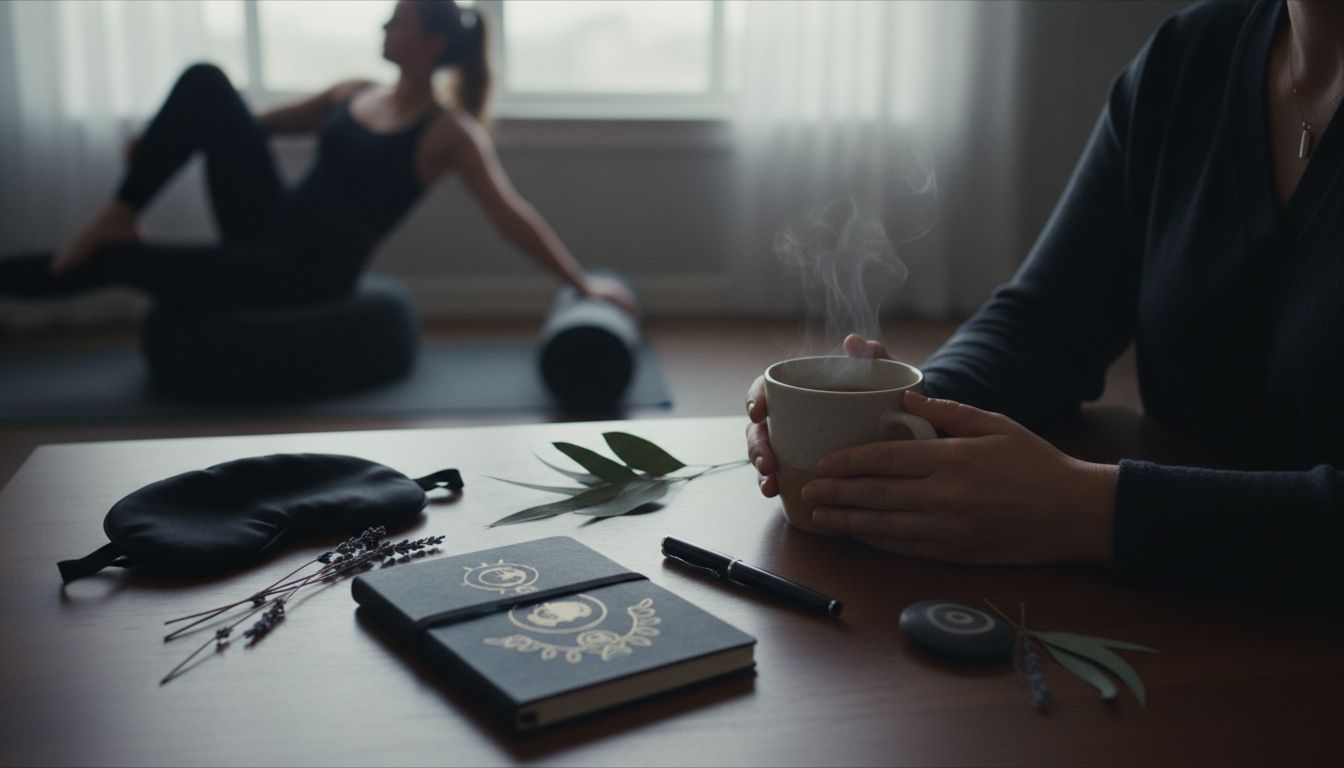
If you want better energy, steadier moods, and a calmer , your daily routine matters more than any one “perfect” wellness habit. A practical way to feel better is to build your day around two powerful systems that constantly interact: your circadian rhythm, which helps set your sleep-wake timing, and your nervous system, which responds to stress, safety, activity, and rest. When your routine supports both, everyday life tends to feel more manageable.
This matters because many adults are already running on too little recovery. The CDC says adults ages 18 to 60 need 7 or more hours of sleep, and it has also reported that more than a third of U.S. adults sleep less than 7 hours. Better sleep can reduce stress, improve mood, and support attention, memory, and long-term health. The good news is that you do not need an extreme reset. You can design a daily practice that syncs with your circadian rhythm and calms your nervous system using small, repeatable actions.
Start with one anchor: a consistent wake time
The simplest place to begin is not bedtime. It is wake time. Current circadian guidance strongly supports the idea that your clock is anchored more by when you wake than by when you simply hope to fall asleep. That is why a steady morning schedule is often more effective than chasing the “perfect” night routine while waking at wildly different times.
The CDC lists “going to bed and getting up at the same time every day” among the habits that can improve sleep. That consistency matters for more than feeling less groggy. NHLBI highlighted 2024 research linking irregular sleep patterns with chronic conditions, which is a helpful reminder that timing regularity is part of health, not just total sleep hours.
If you are building a realistic routine, pick a wake time you can keep most days of the week, including weekends. Then count backward to create a sleep opportunity that gives you at least 7 hours. You do not need to become rigid or anxious about it. Think of it as giving your brain and a reliable daily signal: this is when the day begins.
Use the morning rule: wake, light, move
Once you are awake, give your clock the signal it is looking for: light. The CDC notes that bright light during the daytime strengthens biological rhythms, and even a cloudy outdoor morning is typically more powerful than dim indoor lighting. CDC/NIOSH puts it simply: “Morning light exposure can help us wake up in preparation for the day.”
This is one reason a “wake, light, move” routine works so well. According to a 2025-reviewed Sleep Foundation overview, light is a major circadian cue, and morning sunlight is associated with rising temperature and cortisol, which increases alertness. In plain language, getting outside shortly after waking helps your understand that daytime has started.
Then add gentle movement. It does not have to be a hard workout. A short walk, a few mobility exercises, or light stretching can help you feel more awake without overwhelming your system. If mornings are hectic, try 5 to 10 minutes outside while walking, standing on a porch, or doing a quick loop around the block. Small consistency beats grand plans that disappear after three days.
Make movement a nervous-system tool, not just a fitness task
Exercise is often framed as something you do for weight, appearance, or long-term health. Those benefits matter, but there is another reason it belongs in your daily rhythm: it helps regulate stress in real time. The American Heart Association states clearly that regular exercise reduces the harmful effects of stress, which makes movement a nervous-system practice as much as a fitness one.
This can change how you approach activity. Instead of asking, “What is the hardest workout I can force myself to do?” ask, “What kind of movement helps my feel more stable today?” On an anxious day, that may be brisk walking, cycling, yoga, or a short strength session with controlled breathing. On a low-energy day, it may be a gentle warm-up and a 10-minute walk after lunch.
The AHA recommends warming up so your heart rate and breathing rise gradually, and building toward at least 150 minutes of aerobic activity per week along with stretching and strength work. That target is useful, but the bigger lesson for daily life is this: regular movement lowers stress load when it is practiced consistently. A short walk you actually repeat is more regulating than an intense workout you dread and avoid.
Create a midday activation window
Many people feel decent in the morning, then slide into mental fog, stress, or overstimulation by afternoon. A midday activation window can help. This is a planned period in the middle of the day when you deliberately reinforce daytime signals with light, movement, and a supportive meal rhythm. It helps reduce circadian drift, especially if you work indoors.
NIH/NIEHS materials on circadian disruption emphasize the problem of too little daylight and too much light at night. That makes midday a smart time to check whether your day still looks like “day” to your brain. A short outdoor break, lunch near a window, or a 10-minute walk in natural light can strengthen the message that your active period is still in progress.
This is also a helpful time to notice your nervous system state. If you are wired, a slow walk and a few long exhales may settle you. If you are sluggish, a brisker walk, stairs, or a light mobility routine may lift alertness. The goal is not perfection. It is to prevent your from drifting into a cycle of underexposure to daylight, overreliance on caffeine, and overstimulation later in the evening.
Set an afternoon caffeine cutoff earlier than you think
If you want your nights to support your days, caffeine timing deserves a place in your routine. The CDC advises avoiding caffeine in the afternoon or evening as part of healthy sleep habits. That may sound basic, but newer evidence shows why it matters more than many people realize.
A 2025 randomized crossover trial found that 400 mg of caffeine consumed within 12 hours of bedtime disrupted sleep, including delays in sleep onset and changes in sleep architecture, with greater fragmentation within 8 hours. NIH-hosted evidence also notes that caffeine has an average half-life of about 5.6 hours, with wide person-to-person variation. In some people, that afternoon coffee is still active at bedtime.
A practical rule is to create a personal caffeine cutoff and keep it consistent. For some people that means no caffeine after noon; for others, 1 p.m. may be the latest workable option. If you struggle with falling asleep, waking in the night, or feeling tired-but-wired in the evening, moving your cutoff earlier may be one of the highest-return changes you can make.
Use short calming practices before transitions
When people think about calming the nervous system, they often imagine long meditations, silent retreats, or routines that are hard to maintain in normal life. A more practical approach is to use short, repeatable calming practices before transitions: before work, before a difficult conversation, after commuting, before dinner, or before bed. This is where daily regulation becomes realistic.
The American Heart Association recommends deep breathing to help manage stress and notes that it can reduce feelings of anxiety and depression, stabilize or lower blood pressure, and promote calm by affecting your nervous system. Their simple cue is worth remembering: “Take deep breaths to trigger healthful responses.” One practical technique the AHA highlights is 4-7-8 breathing: inhale through the nose for 4 counts, hold for 7, and exhale slowly for 8.
Think of this as a reset button, not a performance. Try one to four rounds before transitions throughout the day. These tiny pauses can keep stress from stacking. If formal mindfulness appeals to you, that can help too. NCCIH reports meditation use among U.S. adults more than doubled from 7.5% in 2002 to 17.3% in 2022, which shows it has become a mainstream tool. Still, mindfulness is not zero-risk for everyone, so keep it gentle and stop or seek support if it increases distress.
Choose frequency over duration for mindfulness and recovery
If you have ever quit a habit because you could not maintain long sessions, here is encouraging news: a 2025 longitudinal study found that meditation practice frequency had 2.5 times the impact on outcomes relative to practice duration. In other words, short, repeatable calming often beats heroic sessions.
This idea works beautifully for both circadian support and nervous-system care. A two-minute breathing break in the morning, a five-minute mindful walk at lunch, and a short scan before bed may do more for your consistency than one 30-minute session you keep postponing. Small repetitions help teach your that regulation is available throughout the day.
If you want a simple structure, choose three daily touchpoints: morning, mid-afternoon, and evening. Keep each one short enough that you are almost certain to do it. That might look like 60 seconds of slow breathing after waking, three mindful breaths before lunch, and five minutes of quiet stretching at night. Friendly routines stick because they fit real life.
Build your evening routine 90 minutes before bed
A calm night starts earlier than most people think. CDC’s NIOSH sleep guidance recommends preparing for sleep about 1.5 hours before bedtime. That is helpful because it shifts the goal from “fall asleep instantly” to “gradually guide my toward rest.” Your nervous system responds better to a runway than to a last-minute crash landing.
This is the ideal time to lower stimulation. Finish demanding tasks, dim the lights, and reduce the number of decisions you need to make. If possible, keep your activities predictable: light cleanup, hygiene, gentle stretching, reading, soft music, journaling, or a simple breathing practice. NCCIH’s 2025 guidance on stress, anxiety, and sleep problems includes relaxation techniques, mindfulness, music-based interventions, yoga, and melatonin among studied approaches, so there are several evidence-informed options to test.
Remember that the point is not to create a perfect aesthetic routine. It is to send your brain the message that the active part of the day is ending. If your evenings currently feel chaotic, start with just two repeatable steps: dim the room and do 4-7-8 breathing before getting into bed. Small rituals can become strong signals over time.
Follow the simplest sleep rule: bright days, dark nights
Light timing may be the most underused wellness tool available. During the day, seek bright light, especially outdoors. At night, protect darkness. NIH/NIEHS materials emphasize that circadian disruption is tied to too little exposure to daylight together with too much exposure to light at night. That is why “bright days, dark nights” is such a useful rule.
In practical terms, this means reducing screen and bright artificial light in the evening. The CDC recommends turning off electronic devices at least 30 minutes before bedtime, and NHLBI advises avoiding bright artificial light from TVs or computers near bedtime. Screens can tell your brain that it is still daytime, even when your desperately needs a slower signal.
If you are not ready for a full digital sunset, lower the barrier. Dim over lights, move to lamps, reduce screen brightness, and stop scrolling at least 30 minutes before bed. If you can make that 60 to 90 minutes, even better. This one change can support melatonin timing, reduce mental stimulation, and make it easier for your circadian rhythm and nervous system to work together instead of against each other.
You do not need to overhaul your whole life to design a daily practice that syncs with your circadian rhythm and calms your nervous system. Start with the essentials: a consistent wake time, morning outdoor light, regular movement, an earlier caffeine cutoff, a few short breathing breaks, and a dim, predictable evening routine. These habits are simple, but they are not small. Done regularly, they create a day your can understand.
If you want to make this stick, choose one change for the morning, one for the afternoon, and one for the evening. Keep them easy enough to repeat for two weeks before adding more. The goal is not to be “perfectly healthy.” It is to feel steadier, sleep better, and build more trust in your one day at a time.