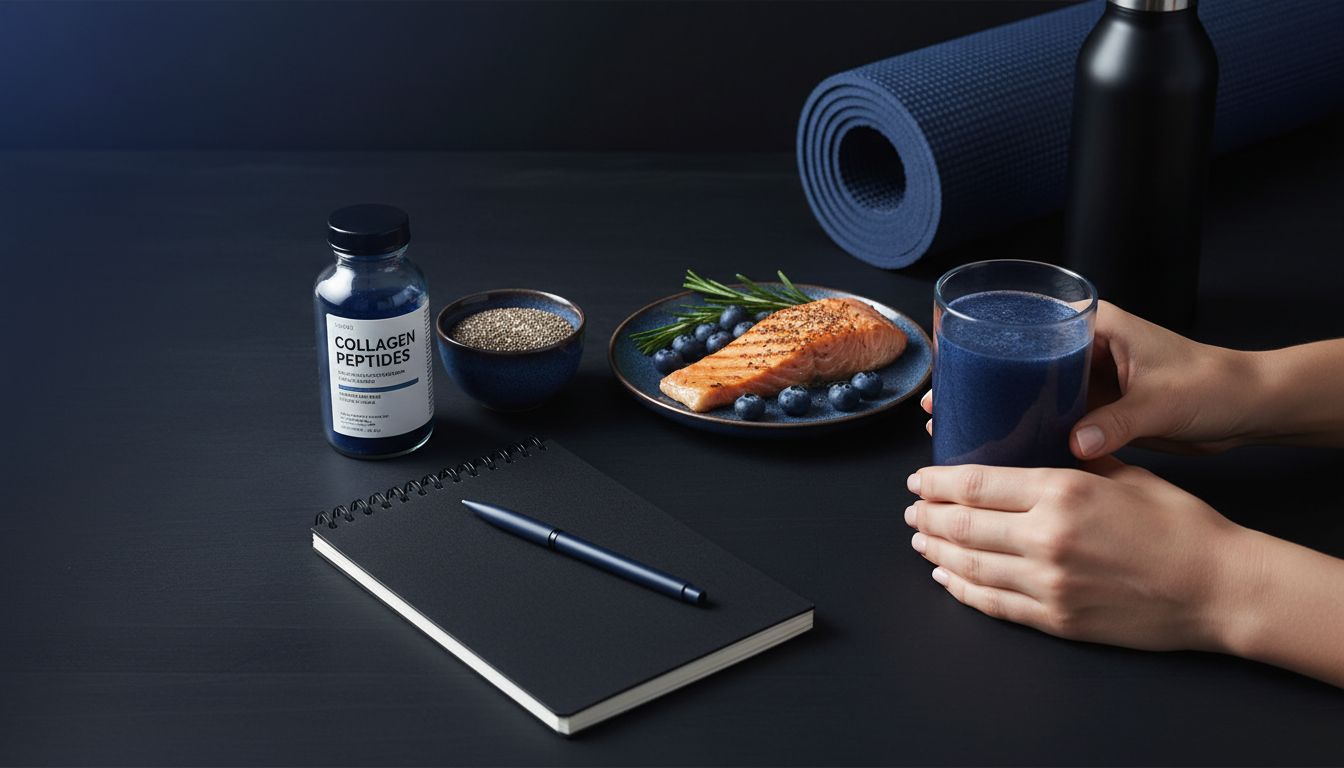

If you want to protect muscle, steady appetite through the day, and even support skin health, the timing and distribution of your protein matters, but not in isolation. Recent reviews and trials (2024) show that total daily protein, per-meal dose, protein quality, your age and activity level all interact to determine results. That means the smart approach is practical: rebalance protein across the day while keeping overall intake and exercise in place.
This article breaks down what the science says, who benefits most, and simple ways to spread protein across meals without overcomplicating your life. You’ll find evidence-based tips, realistic meal ideas, and when to consider a collagen-peptide product for skin support versus getting your protein from whole foods.
Why timing and distribution of protein matter
Muscle protein synthesis (MPS) responds to both how much protein you eat and when you eat it. Short-term studies show that spreading protein more evenly across meals improves 24-hour muscle protein fractional synthesis versus loading most of your protein at one meal. A classic controlled feeding study found an even split (about 31.5 g, 29.9 g, 32.7 g at breakfast, lunch and dinner) produced roughly 25% higher 24-hour mixed muscle protein synthesis than a skewed pattern (about 10.7 g, 16.0 g, 63.4 g).
However, long-term -composition changes are less consistent. Some randomized trials (2024) reported no difference in -composition outcomes during weight loss when protein distribution changed, and recent reviews note that distribution effects are entwined with total intake and activity. In short: distribution can optimize the signaling that stimulates muscle repair, but total protein and resistance exercise remain foundational.
Finally, personalization matters. Age, activity level, and protein quality change how your responds. For example, a 2024 review highlighted that older adults (>60) may need meals with about 2.8 g of leucine, roughly 30 g of a high-quality protein, to robustly stimulate MPS. Younger people often show a more linear response to increasing doses.
How even protein across meals helps protect muscle
An even per-meal protein strategy ensures each eating occasion provides enough amino acids to trigger muscle-building signals. The classic feeding study’s even breakfast/lunch/dinner pattern led to superior 24-hour muscle protein synthesis compared with a heavily skewed pattern, suggesting that spreading protein keeps those signals firing throughout the day rather than missing opportunities early on.
That advantage can be particularly important during weight loss or in aging: the 2024 review pointed to a “first-meal after overnight fast” benefit, where higher protein at the first meal improves muscle-protein synthesis and can help spare lean mass during calorie restriction. Still, reviewers called long-term benefit in older adults speculative, underscoring the need for ongoing research.
Given the mixed long-term outcome data, a sensible strategy is to prioritize overall protein targets (based on your weight, goals, and activity) and aim for meaningful per-meal doses, roughly 25,30+ grams of high-quality protein at key meals, especially if you’re older or reducing calories.
Use breakfast strategically: appetite, lean mass and daily rhythm
Recent randomized crossover studies show clear short-term benefits to a protein-rich breakfast. A 2024 trial found a dairy-based protein-rich breakfast increased satiety, fullness and satisfaction and reduced hunger and the desire to eat before lunch. These appetite effects can help control overall calorie intake and make planned eating easier.
The same 2024 review that noted a first-meal advantage suggests that a higher-protein breakfast may help spare lean mass during weight loss by stimulating muscle-protein synthesis early in the day. While long-term -composition evidence is mixed, a protein-forward morning can be a practical way to both protect muscle signaling and reduce mid-morning cravings.
If mornings are rushed, simple swaps work: Greek yogurt or a protein-enriched yogurt (which in trials improved appetite profile versus lower-protein versions), a high-protein smoothie with milk or yogurt, or eggs with whole-grain toast can all deliver that effective per-meal dose.
Protein and appetite control: short-term wins you can use
Several acute trials in 2024 reinforced that higher-protein meals often increase satiety and reduce short-term hunger and prospective food intake. Protein-rich breakfasts and protein-enriched yogurts produced measurable reductions in hunger in the hours after eating. For many people, that translates into fewer impulsive snacks and steadier energy across the morning.
That said, appetite responses aren’t uniform. A 2024 trial in older adults showed that appetite reactions to protein can differ by physical activity level, so expect some individual variability. Food matrix, the whole meal’s composition and texture, also matters: a scoping review and randomized crossover studies suggest that the matrix can change post-meal muscle-protein synthesis and likely affects satiety too.
Practically, combining protein with fiber, healthy fats, and whole grains improves fullness and nutrient balance. Protein alone helps, but pairing it with fiber- and nutrient-rich foods makes meals more satisfying and more likely to sustain steady intake across the day.
Skin health: where collagen peptides may add value
Skin benefits are not the same as muscle benefits. Recent 2024 randomized trials focused specifically on collagen peptides rather than general dietary protein. In one RCT, 8 weeks of tuna collagen-peptide supplementation in 72 women improved skin hydration, elasticity, density and reduced transepidermal water loss, with some benefits persisting two weeks after stopping.
Cell and tissue studies from the same line of research showed dose-dependent increases in collagen and elastin synthesis in human dermal fibroblasts and reduced senescent cells, offering a plausible mechanism for the clinical skin improvements. These findings support targeted collagen-peptide supplements for skin goals, but they don’t prove that simply shifting more dietary protein to breakfast or other meals will produce the same skin effects.
If skin support is your priority, consider adding a validated collagen-peptide product alongside a balanced protein intake, rather than assuming any increase in dietary protein will deliver the same effects. As always, look for products with transparent dosing and reputable trial backing.
Putting it together: practical ways to rebalance protein across the day
Start by aiming for a realistic daily protein target based on your goals and size, then divide that total into meals that deliver ~20,35 g of protein each (older adults may aim for the higher end, around 30 g or more at key meals). This is the simple operationalization of “rebalance protein across the day” so each meal meaningfully stimulates muscle-protein signaling.
Practical swaps: make breakfast protein-focused (Greek yogurt, cottage cheese, eggs, protein smoothie), aim for a solid protein portion at lunch (lean meats, legumes with whole grains, tofu), and keep dinner balanced rather than overloaded. Use portable high-quality options like canned tuna, hard-boiled eggs, or single-serve protein yogurts for busy days. If you want extra skin support, add a collagen-peptide supplement as a complement, not a replacement, to whole-food protein.
Finally, pair this eating pattern with resistance training or regular physical activity to maximize muscle maintenance, and adjust total calories if you’re losing weight. If you have kidney disease or other medical conditions, check with your healthcare provider before increasing protein or starting supplements.
When to prioritize per-meal protein and when to be flexible
Prioritize per-meal protein when you are older, in a calorie deficit, or trying to preserve or build muscle. The 2024 review and controlled-feeding data point to stronger benefits for these groups when meals contain adequate protein. A protein-focused first meal is especially useful during weight loss to help preserve lean mass and reduce hunger.
Be flexible if long-term -composition changes are your only concern and your total daily protein is adequate. Some randomized trials found no clear -composition difference from redistribution alone, so if total protein and training are on target, small day-to-day variations are unlikely to undo your progress.
Use an evidence-informed, sustainable approach: target meaningful per-meal doses on most days, keep overall protein and exercise consistent, and adjust based on hunger, energy, and how your responds. Small, practical habits sustained over months matter more than perfect meal symmetry every single day.
Rebalancing protein across the day is a practical, science-backed strategy to help protect muscle signaling, steady appetite, and,when combined with specific collagen peptides,potentially support skin health. The strongest consistent evidence still points to total daily protein, adequate per-meal dosing, protein quality, and regular resistance activity as the pillars of success.
Try simple changes: move 20,30 g of high-quality protein into breakfast, evenly space protein at main meals, and consider a collagen-peptide supplement if skin is a goal. Keep expectations realistic, personalize to your activity and age, and consult a clinician if you have health conditions. Small, consistent shifts often create the biggest long-term wins for strength, hunger control, and confidence.