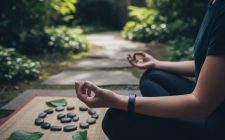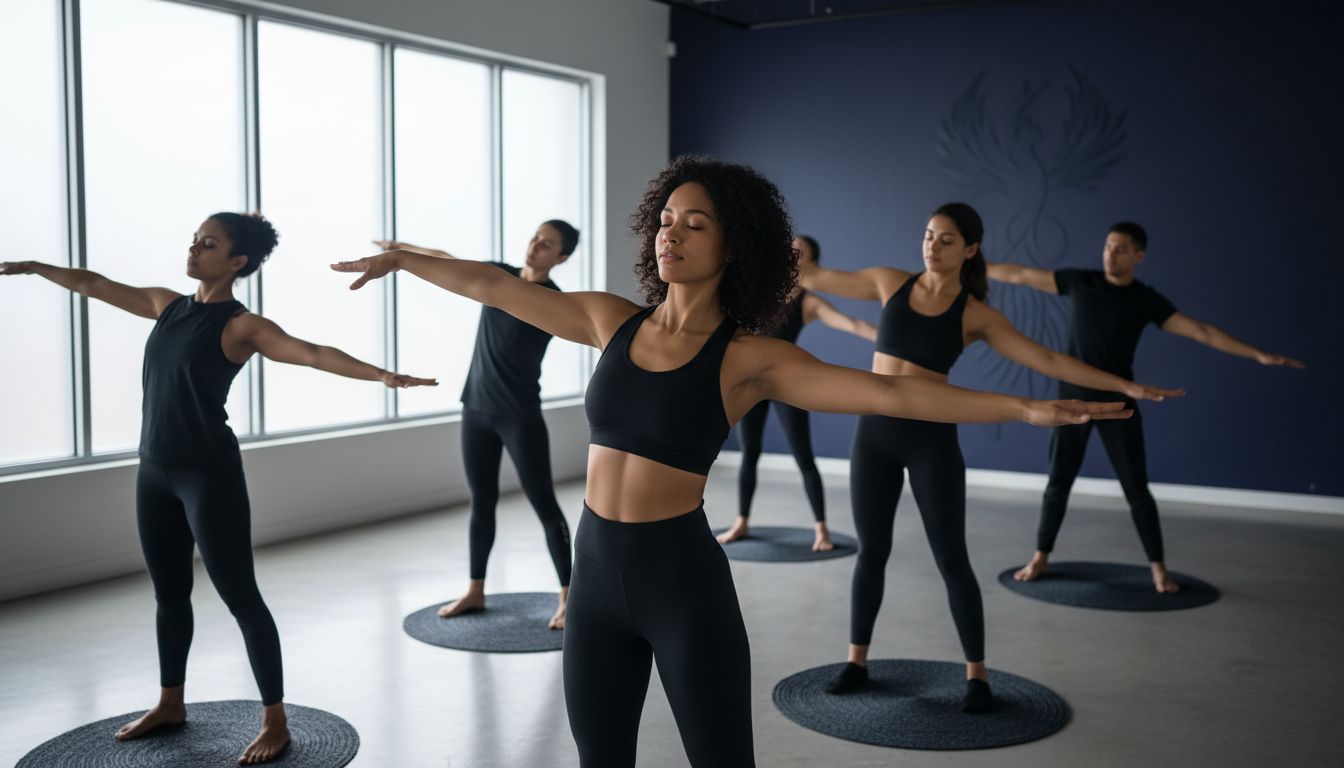

When confidence feels fragile, intense fitness plans often make things worse. A long workout, a strict routine, or an all-or-nothing mindset can quietly reinforce the fear that you are already behind. That is why tiny movement rituals and welcoming community classes matter so much. They offer a gentler path back to trust in your , your effort, and your ability to begin again.
Recent health research points in the same practical direction: small, repeatable actions build habits, open-ended goals reduce pressure, and supportive group settings help people stay active longer. In other words, self-belief does not always return through dramatic transformation. Very often, it grows through a short stretch after brushing your teeth, a calming hand-on-heart pause before work, or a local class where showing up counts as progress.
Why self-belief often starts with movement that feels manageable
Many adults do not struggle because they lack information. They struggle because movement has become emotionally loaded. Past attempts may have felt punishing, inconsistent, or tied to shame. When exercise becomes a test of worth, even simple activity can feel intimidating. A more helpful starting point is to make movement small enough that it does not trigger that old sense of failure.
This is where the idea of tiny movement rituals becomes powerful. Research on daily micropractices suggests that repeated actions taking no more than a few seconds can still strengthen habits over time. In one randomized trial, a very brief self-compassionate touch practice was designed to support self-compassion and habit formation. That matters because confidence is often built through repetition, not intensity. A tiny action done consistently can become evidence that you keep promises to yourself.
Public-health guidance is moving in this direction too. NIH advice on mindful movement emphasizes taking things in small steps and doing what you can to build the self-confidence to do more. That framing is practical and kind. Instead of asking, “Can I overhaul my life?” it asks, “What small action can I complete today?” For many people, that question opens the door to lasting change.
How micropractices turn effort into identity
A tiny movement ritual can be almost anything: three shoulder rolls before opening your laptop, one slow squat while waiting for the kettle to boil, a short walk to the mailbox, or a deep breath with your hand resting on your chest. These actions may look too small to matter, but they can change the story you tell yourself. They shift your identity from someone who keeps postponing movement to someone who moves, even briefly, every day.
That identity shift is important because self-efficacy, or belief in your ability to do something, remains a central driver of behavior change. Reviews of exercise self-efficacy continue to show that people who believe they can be active are more likely to stay active. Tiny wins help create that belief. Every completed ritual becomes a mastery experience, and mastery experiences are one of the strongest ways to rebuild confidence.
Rituals may also help because they create structure. A recent experimental paper found that ritualized actions improved self-control through heightened feelings of self-discipline. In everyday life, that can mean a short, repeated movement cue feels less like a decision and more like part of who you are. You do not need motivation to reinvent itself each morning. You simply follow the ritual and let consistency do its quiet work.
Why open-ended goals feel safer and more sustainable
One reason people lose confidence around exercise is that goals are often too rigid. If the plan says walk for 30 minutes and you only manage 8, it can feel like failure, even though 8 minutes is still meaningful movement. This is why open-ended goals deserve more attention. Instead of demanding a fixed target, they leave room for your real energy, schedule, and physical state on a given day.
A mixed-methods feasibility trial found that open goals increased enjoyment and self-efficacy while reducing pressure, guilt, and fear of failure. Participants even said this approach “took away the trauma of failing.” That phrase is striking because it captures what many people feel but rarely say out loud. A flexible goal does not lower your standards. It lowers the emotional cost of being human.
In practical terms, an open-ended goal might sound like, “I will move for a few minutes today,” or “I will attend class and do what I can.” This approach protects momentum. It helps you keep the habit alive even on low-energy days, and it turns consistency into something realistic. Over time, that realism supports self-esteem because you learn that adjusting is not quitting. It is a form of self-respect.
The quiet power of community classes
There is something uniquely reassuring about moving near other people who are also learning, adapting, and trying. Community classes can soften the loneliness that often surrounds health goals. You realize quickly that not everyone is strong, coordinated, or confident at the start. Many are simply showing up and practicing. That shared effort can be deeply healing for people whose self-belief has been worn down.
Research supports the value of this setting. A randomized trial on a group-dynamics-based physical activity intervention noted that group-based programs are linked with better adherence, more moderate-to-vigorous physical activity, and more social interaction than individual approaches. The Community Guide also reports that community-based social support interventions were effective at increasing physical activity in all nine reviewed studies. These findings matter because consistency grows more easily when people feel supported, seen, and included.
National guidance echoes the same message. The CDC highlights social support, counseling, goal-setting, and progress monitoring as useful tools for sustaining physical activity over time. In a class setting, many of these elements happen naturally. There is structure, a teacher, a familiar schedule, and often a sense that your presence matters. That combination can create a low-pressure environment where self-belief begins to return.
How belonging rebuilds confidence from the outside in
Self-belief is often described as something purely internal, but in real life it is shaped by relationships. When a teacher offers a modification without judgment, when a classmate smiles at your effort, or when a group welcomes your slower pace, you receive a different message about yourself. You learn that participation is valuable even before performance improves. That social experience can be just as important as the movement itself.
WHO guidance recognizes physical activity across community and educational settings as beneficial for both physical and mental health. This broader view is helpful because it reminds us that movement is not only about exercise metrics. It can also be about connection, routine, expression, and emotional steadiness. A local class at a community center, church hall, library room, or dance studio may become a place where people rebuild trust in themselves one session at a time.
Programs shaped around empowerment show how powerful this can be. Community dance and expressive movement initiatives connected to Harvard have described classes as spaces for wellness care, belonging, self-expression, self-care, and healing in community. That language matters. It suggests that movement can be a soft entry point into confidence, especially for those who do not relate to traditional gym culture. Sometimes belief returns when the room feels less like a test and more like a welcome.
Why classes work especially well when confidence is low
When self-esteem is low, making decisions can feel exhausting. You may wonder what to do, whether you are doing it right, and if it is even worth the effort. A class removes some of that friction. You get a set time, a guided plan, and a clear beginning and end. This reduces mental load and lets you focus on participation rather than perfection.
Supervised exercise has also been linked to improvements in exercise self-efficacy, including in older adults. A secondary analysis from the Exercise for Healthy Aging Study emphasized that exercise self-efficacy is important for both starting and continuing exercise, and examined changes after 24 weeks of supervised activity. Another recent study, Wits Wellness, highlighted the value of classes that combine health education, social engagement, and support for self-efficacy. These findings reinforce a simple idea: people often gain confidence faster when someone helps them experience success safely and repeatedly.
This matters not only for older adults but for anyone returning to movement after illness, stress, burnout, -image struggles, or long inactivity. NIH also notes that social support can help people of all ages and abilities become more active, including those living with chronic conditions. A good community class can meet people where they are, which is exactly what shaky confidence needs.
Simple ways to create your own tiny movement rituals
If you want to rebuild self-belief, start by making movement almost absurdly easy. Choose one action that takes less than 20 seconds and link it to something you already do daily. For example, after brushing your teeth, stretch your arms over. After sitting down at your desk, roll your shoulders five times. After lunch, stand and take three slow breaths. The goal is not to impress yourself. The goal is to become consistent.
It also helps to keep the ritual emotionally supportive. A micropractice can include self-compassionate touch, such as placing a hand on your heart or upper arm while taking one steady breath. This pairs movement with reassurance, which can be especially useful if your relationship with exercise has been harsh or self-critical. The more your ritual feels grounding rather than demanding, the more likely you are to repeat it.
Finally, track success in the gentlest possible way. A simple check mark on a calendar, a note in your phone, or a small habit app can be enough. CDC guidance points to progress monitoring as one tool for maintaining activity, and this does not have to be complicated. You are not measuring worth. You are gathering proof that you can show up for yourself in small, meaningful ways.
How to choose a community class that supports self-esteem
The best class for rebuilding confidence is not necessarily the trendiest one. It is the one that feels approachable. Look for beginner-friendly language, modification options, and an atmosphere that values participation over performance. Walking groups, chair yoga, tai chi, gentle strength classes, dance-based fitness, aquatic exercise, and mindful movement sessions can all work well depending on your needs and preferences.
Before joining, ask a few practical questions. Is the instructor comfortable with beginners? Are there options for different fitness levels or physical limitations? Is the location easy to reach? Does the schedule fit your actual life? If possible, choose a class that reduces friction rather than adding to it. The easier it is to attend, the more likely you are to repeat the experience and benefit from the mastery loop of try, repeat, belong, and improve.
It can also help to use an open-ended goal for your first few visits. Promise yourself only that you will attend and do what feels manageable. You do not need to keep up with anyone else. You do not need to “earn” your place. Community classes are most powerful when they become a steady container for practice, support, and small wins. With time, those wins often become the foundation of a more stable, believable confidence.
Self-belief rarely returns all at once. More often, it is rebuilt in quiet moments: a short stretch you actually remembered to do, a class you attended even though you felt unsure, a familiar face that made you feel welcome, a that responded a little more kindly than it did last month. These moments may seem modest, but they are exactly how confidence grows in real life.
If you have been waiting to feel fully ready before moving again, consider this your permission to begin much smaller. A tiny movement ritual and a supportive community class can work together to create something powerful: structure without pressure, progress without shame, and belonging without performance. That combination is often enough to help you trust yourself again, one small step at a time.