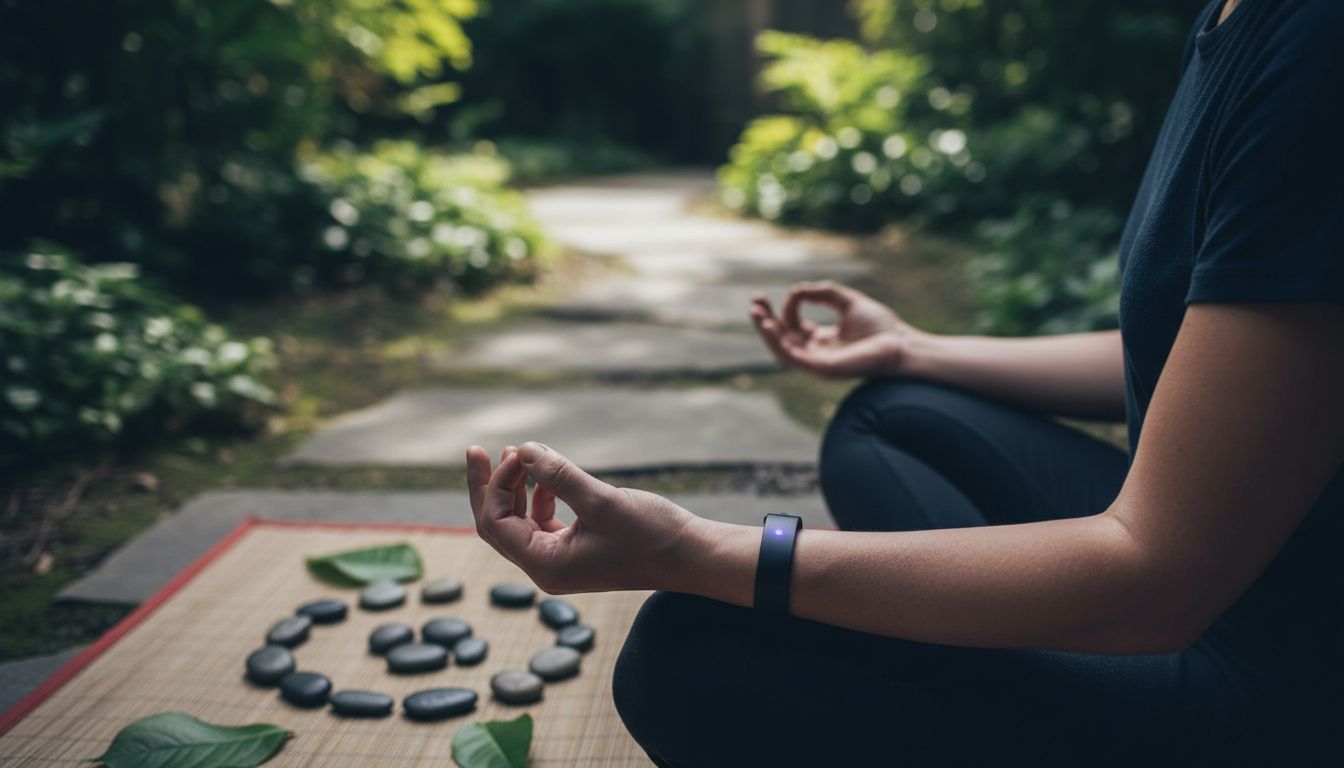

Everyday resilience used to sound like a personality trait you either had or did not have. Today, the conversation is changing. New research suggests resilience is better understood as something you can strengthen in small, practical ways through the day, especially when brief presence practices are paired with wearable feedback that helps you notice stress sooner.
That shift matters for real life. Most adults do not have time for long retreats or complicated wellness routines, but many can manage a one-minute breathing reset, a short mindfulness check-in, or a smartwatch prompt that nudges them to pause. Recent studies from 2025 and 2026 show that these low-burden tools are starting to reshape how we think about stress, recovery, and self-regulation in everyday settings.
Why everyday resilience is becoming a daily skill
Researchers are increasingly moving away from the idea that resilience is fixed. Instead, the current trend is to treat it as a daily, trainable state that can rise or fall based on sleep, stress load, recovery, attention, and how quickly you respond when your begins to feel overloaded. That is a hopeful message for anyone trying to feel steadier in normal life, not just during a crisis.
A 2025 randomized controlled trial in college students is a good example of this shift. Rather than looking only at stress relief, the study examined brief mindfulness meditation with resilience as a specific outcome. That is important because it shows the field is no longer focused only on helping people feel calmer in the moment, but also on helping them adapt better over time.
This broader definition of resilience also shows up in wearable research. A 2025 observational study on burnout prevention used long-term wearable data such as sleep stage proportions and nocturnal stress patterns to model recovery and resilience over time. In other words, resilience is increasingly being measured through the small daily signals that reflect how well the bounces back.
What brief presence practices actually look like in real life
Brief presence practices are small moments of attention that help you come back to your , your breath, or your immediate surroundings. They are not necessarily formal meditation sessions. They can be as simple as noticing your inhale for thirty seconds, relaxing your shoulders when a watch alert appears, or taking a one-minute pause before answering an email that raises your stress.
Part of the appeal is practicality. Short mindfulness formats are being tested more often because they are scalable, remote-friendly, and easier to fit into busy schedules. Several 2025 studies used brief or digitally delivered interventions, and that reflects a clear push toward resilience tools that people can actually sustain.
There is also evidence that short mindfulness training can affect how stress is experienced in the moment. A 2025 randomized controlled trial found that mindfulness training supported a more positive outlook during an acute stress challenge. That does not mean stress disappears, but it may mean the mind and respond with a little more flexibility instead of spiraling immediately.
How wearable feedback adds a useful layer of awareness
Wearables are no longer just step counters or sleep score gadgets. Many now estimate stress using heart-rate variability, often called HRV, which remains one of the most common physiological markers in wearable stress measurement. A 2025 review noted that many devices rely on HRV because it tends to drop under stress, making it a practical signal for detecting strain.
This matters because many people do not notice rising stress until they are already snappy, drained, or mentally foggy. A watch or wearable can act like an early mirror. Instead of waiting until a stressful day fully derails you, a subtle prompt can help you catch the shift earlier and choose a regulating action while it is still manageable.
Recent research also shows that wearables are being used as tools for wellbeing, not only measurement. A 2025 preliminary randomized study of the Apollo Neuro wearable in students assessed burnout, stress, and resilience, showing how consumer devices are entering the resilience-intervention space. The larger trend is clear: these devices are becoming active supports rather than passive dashboards.
Why micro-interventions may be more powerful than they seem
One of the most exciting developments is the rise of the micro-intervention. This means a very short, targeted support delivered at the right moment, often in response to a physiological change. Instead of expecting people to remember a self-care routine at the perfect time, the technology can help bring the intervention to them when stress markers begin to shift.
Two 2025 microrandomized trials explored this idea by using transient reductions in heart-rate variability to trigger brief interventions in real time. The goal was to stabilize autonomic function and support health as people moved through daily life. This is a major step beyond passive tracking because it turns data into immediate, practical guidance.
Wearables are also becoming central to quick micro-check-ins. A 2025 smartwatch feasibility study found that brief ecological momentary assessments could be answered quickly on a watch with low cognitive burden. That matters because resilient habits are easier to build when they do not demand a lot of time, effort, or mental energy.
Breath-synced feedback and the ’s stress response
Breathing exercises are often recommended for stress, but many people struggle to know whether they are actually settling their nervous system. That is where feedback may help. A 2025 study in trauma-exposed adults found that breath-synced vibration during breath-focused mindfulness reduced respiration variability, suggesting that wearable feedback can help the settle during brief practice.
This kind of support can be especially useful for people who feel overwhelmed by open-ended relaxation instructions. Being told to “just breathe” is not always enough when the feels revved up. A wearable that gently vibrates in sync with a slower breathing rhythm can create a more concrete anchor and make the practice easier to follow.
For everyday resilience, that matters because regulation often starts in the before it becomes a mental shift. If your breathing steadies, your sense of urgency may soften. If that pattern repeats in small moments across the day, the cumulative effect may support better recovery, steadier mood, and less reactivity under pressure.
What the latest mindfulness and smartwatch studies really show
One of the most relevant findings comes from a 2025 randomized controlled trial in which mindfulness-based stress reduction was supplemented with smartwatch physiological signals. After eight weeks, participants showed improved mindfulness and reduced stress. Anxiety and depression, however, did not significantly change in the short term.
That is a useful reminder to stay realistic. Wearable-supported mindfulness is not a magic fix, and it may not transform every symptom quickly. But it can strengthen present-moment awareness and reduce stress, which are meaningful outcomes on their own. In practical terms, that may be one pathway through which resilience grows.
Another reason this matters is that resilience is often built before major symptom changes show up. If you notice stress faster, interrupt it earlier, and recover more consistently, you may be laying the groundwork for better long-term wellbeing even if you do not feel dramatically different after a few days. Progress can begin as improved awareness and regulation.
Where this is already helping people under real pressure
The strongest case for these tools may be how they are being tested in high-stress groups. A 2025 randomized clinical trial found that physicians who wore a smartwatch and could access physiological data experienced improvements in burnout and resilience. For professionals with limited time and intense demands, that kind of low-burden support is especially promising.
Other medically stressed populations are also being studied. A 2025 multicenter randomized trial tested an eight-week remotely delivered brief mindfulness-based cognitive therapy program in women after myocardial infarction, with stress as the primary outcome. This shows that short mindfulness formats are being taken seriously even in health contexts where stress can directly affect recovery.
The momentum continues into frontline care settings. A 2026 proof-of-concept protocol proposes a wearable-based program to optimize stress regulation, resilience, and wellbeing in emergency care environments. That tells us the idea is no longer experimental in a narrow sense. It is increasingly seen as a practical strategy for people who need support during demanding routines and shifts.
How to use this trend in a simple, realistic way
If you are curious about building everyday resilience, the best place to start is small. Choose one brief presence practice you can repeat consistently, such as a sixty-second breathing pause, a two-minute scan before lunch, or a short check-in whenever your watch flags stress. Consistency matters more than complexity.
It can also help to match the tool to your current level of strain. A 2025 AI-enhanced randomized clinical trial found that physical activity and mindfulness were especially effective for severe distress, while sleep hygiene and physical activity fit milder distress better. That suggests you do not need to use the same strategy every day. The smartest approach is often the one that fits your state.
If you already wear a smartwatch, use it intentionally. Turn stress notifications into action cues, not background noise. When you get a prompt, try one grounded response: lengthen your exhale, relax your jaw, unclench your hands, stand up, or step outside for one minute. The goal is not perfect calm. The goal is recovering faster and more often.
The big takeaway is encouraging: brief presence practices and wearable feedback are changing everyday resilience by making self-regulation more immediate, practical, and measurable. Instead of waiting until stress becomes overwhelming, people can now use tiny moments of awareness and timely feedback to support steadier functioning throughout the day.
That does not mean technology replaces intuition or deeper self-care. It simply gives many adults a helpful bridge between noticing and acting. When short mindfulness, breath regulation, and wearable support work together, resilience starts to look less like an abstract ideal and more like a trainable daily habit.