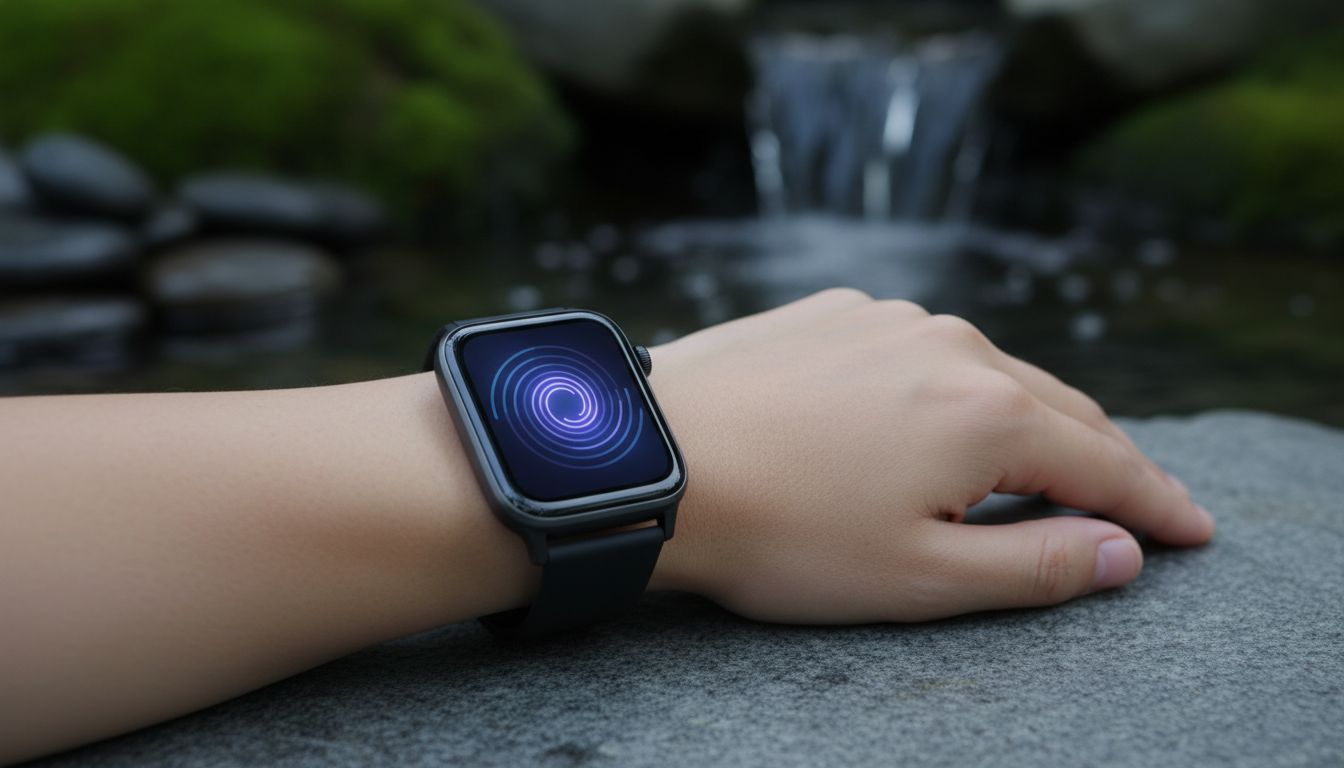

Some of the most helpful moments in modern self-care do not come from dramatic lifestyle overhauls. They come from tiny interruptions: a watch vibration reminding you to unclench your jaw, a breathing prompt before a tense meeting, or a suggestion to stand up and reset after an hour of screen time. That is the promise behind AI-driven biofeedback and wearable micro-breaks: using real-time signals to gently nudge you toward calmer habits before stress snowballs.
At the same time, it is worth keeping expectations realistic. Research is moving quickly, and wearable biosensors are increasingly used to detect stress patterns through measures like heart rate variability, electrodermal activity, movement, and sleep. But experts also point out that the field is still much better at prediction and trend tracking than proving long-term resilience gains. In other words, your wearable may be useful as a coach, but it is not a mind reader.
Why wearables are becoming everyday stress tools
Wearables have become attractive for stress support because they fit into ordinary life. A smartwatch, ring, or fitness band can collect physiological signals in the background while you work, commute, exercise, or sleep. That makes them practical for spotting moments when your may be under strain, even if you have not consciously noticed it yet.
Recent research shows strong growth in machine-learning systems that use wearable data to monitor stress and mental health in real time. Instead of relying on a single number, newer systems often combine multiple signals such as heart rate variability, photoplethysmography, electrodermal activity, movement, and sleep patterns. This multimodal approach matters because stress is messy, and no single metric captures the whole picture.
For readers focused on practical well-being, this means wearables can be useful for awareness. They may help you notice patterns like poor sleep before a stressful day, rising tension during back-to-back meetings, or long stretches without recovery. That kind of pattern recognition can support everyday resilience, especially when paired with simple actions rather than perfectionist tracking.
What AI is actually doing behind the “calm” nudge
When a wearable tells you to breathe, pause, or take a short walk, AI may be helping decide when that suggestion appears. These systems are increasingly designed as just-in-time interventions, meaning they aim to deliver the right message at the right moment. Instead of sending generic reminders every few hours, they try to use your signals and context to time nudges more intelligently.
Some research is going beyond detecting stress after it happens and trying to predict physiological strain before it peaks. For example, a 2024 JMIR protocol proposed personalized real-time models that use wearable data to predict stress-related blood pressure spikes. This shift from reaction to anticipation is one reason AI is receiving so much attention in the wellness wearable space.
Still, prediction is not the same as certainty. Algorithms are making educated guesses based on patterns, not directly reading your emotions. If your device detects elevated strain, that could reflect stress, but it might also reflect caffeine, dehydration, exercise, poor sleep, heat, or simple movement. The most useful way to think about these nudges is as prompts to check in with yourself, not final verdicts about your mental state.
The biofeedback methods that matter most
A lot of wearable calming tools are built around biofeedback, especially heart-rate-variability-based guidance. HRV biofeedback remains one of the main mechanisms researchers discuss for self-regulation. In simple terms, the device measures physiological patterns and then guides you toward slower breathing or other calming behaviors that may help your nervous system shift into a steadier state.
This is why many devices focus on paced breathing sessions, relaxation scores, or gentle prompts to slow down. Recent reviews still describe HRV biofeedback as a plausible pathway for stress regulation, even though the evidence base continues to evolve. The details matter a lot, including the quality of the signal, the breathing protocol, how the prompt is delivered, and whether the person actually finds the guidance usable.
There is also growing interest in closed-loop haptic feedback. A 2025 smartwatch study explored rhythmic haptic biofeedback for relaxation and sleep onset, showing how touch-based cues can guide breathing or calming rhythms without requiring you to stare at a screen. For many people, that is a real advantage. A subtle buzz on the wrist can feel less intrusive than another phone notification.
Where micro-breaks fit into resilience
Micro-breaks are short pauses that help interrupt accumulating strain. They might last 30 seconds, 2 minutes, or 5 minutes, and they can include breathing, stretching, stepping outside, drinking water, or simply looking away from a screen. Wearables are increasingly being designed to support these brief resets because they are easier to repeat consistently than longer wellness routines.
Reviews of wearable interventions note that devices can trigger timely reminders to rest, step away, or take a break in stressful settings. In heat-stress research, for example, wearable systems are already being used to prompt workers to take shaded breaks and protective action in real time. That same design logic can apply to office work, caregiving, commuting, or any day where physical and mental load gradually build up.
From a practical health perspective, micro-breaks work well because they lower the barrier to action. Many adults do not need another complicated routine. They need a nudge they can actually follow at 11:40 a.m. between meetings. A wearable that encourages one minute of slower breathing or a quick posture reset may not feel dramatic, but over time these tiny pauses can make self-care more doable and less all-or-nothing.
What the evidence says, and what it does not
The current evidence is encouraging but mixed. Wearable biofeedback can reduce stress, yet the effects are often modest rather than life-changing. For example, a randomized double-blind controlled study of neurofeedback-assisted meditation using a wearable device found only modest stress-reduction effects overall. That does not mean the tools are useless. It means they should be viewed as supportive aids, not miracle fixes.
Research on mobile stress-management interventions, which often include wearable-linked apps and prompts, also suggests benefits depend heavily on design. A 2025 meta-analysis found these interventions can help, but the strongest effects were tied to how well the programs were built and delivered. In real life, a good nudge is one that is timely, easy to follow, and not so frequent that it becomes annoying.
Perhaps the most important limitation is that long-term resilience gains are still harder to prove than short-term stress detection. Many studies show that wearables can monitor, estimate, or predict strain, but fewer demonstrate lasting improvements in resilience over months or years. So if you use these tools, it is smart to think of them as one piece of your support system alongside sleep, movement, boundaries, social connection, and professional care when needed.
Why “stress scores” should be handled carefully
One of the biggest consumer pitfalls is treating a wearable stress score as hard truth. A 2025 preprint comparing research-grade and consumer devices found that stress-detection performance varied by device. That is a useful reminder that reproducibility remains a major issue. Different sensors, algorithms, and contexts can lead to different conclusions from similar signals.
Researchers are taking this seriously. In 2025, the Stress in Action database was launched to help compare ambulatory wearable devices based on quality, reliability, validity, and usability. Efforts like this are important because they push the field toward better standards instead of flashy but inconsistent claims. For consumers, it is a sign that the science is still being refined.
This matters for everyday resilience because constant minute-by-minute interpretation can backfire. There is growing debate about whether HRV-based stress features are accurate enough for continuous emotional monitoring. If your watch tells you that you are stressed when you feel fine, or calm when you feel overwhelmed, that mismatch can create confusion. In many cases, wearables are more credible as habit-building tools than as emotion-diagnosis devices.
How sleep, context, and multiple signals improve the picture
Stress does not begin and end with one heartbeat metric. That is why research increasingly uses multimodal sensing rather than relying only on HRV. Combining movement, blood volume pulse, electrodermal activity, sleep data, and other signals can improve recognition of rising strain. The goal is to build a more complete picture of what your is experiencing across the day.
Sleep is especially important for everyday resilience. A 2024 study found that wearable-derived sleep metrics could predict stress in first-year college students, highlighting how noninvasive sleep indicators may help forecast next-day strain. This makes intuitive sense in daily life too. A poor night of sleep often lowers your bandwidth for frustration, concentration, and emotional regulation.
Researchers are also exploring more biologically grounded forms of sensing. The 2024 StressFit system combined electromyography with sweat cortisol measurement, pointing beyond indirect proxies alone. These advances are exciting, but they are also a reminder that stress monitoring is complex. The more context your wearable can consider, the more helpful its nudges may become, but no system can fully replace your own experience and judgment.
How to use AI-driven biofeedback in a healthy, realistic way
The most credible near-term use of these devices is behavioral coaching. That means using your wearable to support breathing practice, brief pauses, recovery habits, sleep hygiene, and awareness of strain patterns. It does not mean asking it to diagnose burnout, anxiety, or emotional truth with precision. When you frame the tool as a coach, it becomes easier to benefit from it without giving it too much authority.
A practical approach is to choose just two or three actions linked to wearable prompts. For example, if you get a calm nudge, take six slow breaths. If your device shows poor recovery after sleep, protect caffeine timing and aim for an earlier bedtime. If your watch suggests a break after prolonged inactivity or strain, stand up, stretch your shoulders, and look away from your screen for one minute. Small repeatable responses usually beat ambitious plans you cannot maintain.
It also helps to notice whether the device improves your self-trust or undermines it. The best wearable experience should make you more aware, not more anxious. If constant alerts feel irritating or obsessive, reduce notifications or use summary trends instead of real-time prompts. Wellness technology should support resilience, not turn your nervous system into another performance project.
Wearables that nudge you to calm can absolutely have a place in everyday self-care. They are getting smarter, more personalized, and better at delivering well-timed micro-breaks that fit real life. For busy adults who want simple support, that can be genuinely useful. A subtle prompt to breathe, pause, or rest may be enough to interrupt stress spirals before they gain momentum.
But the healthiest way to embrace this technology is with curiosity and balance. AI-driven biofeedback is promising, especially as a form of behavioral coaching, yet the science still has limits around accuracy, reproducibility, and long-term resilience outcomes. Let your wearable be a helpful guide, not the final authority. The real goal is not perfect tracking. It is building kinder, steadier habits that help you feel more grounded in everyday life.