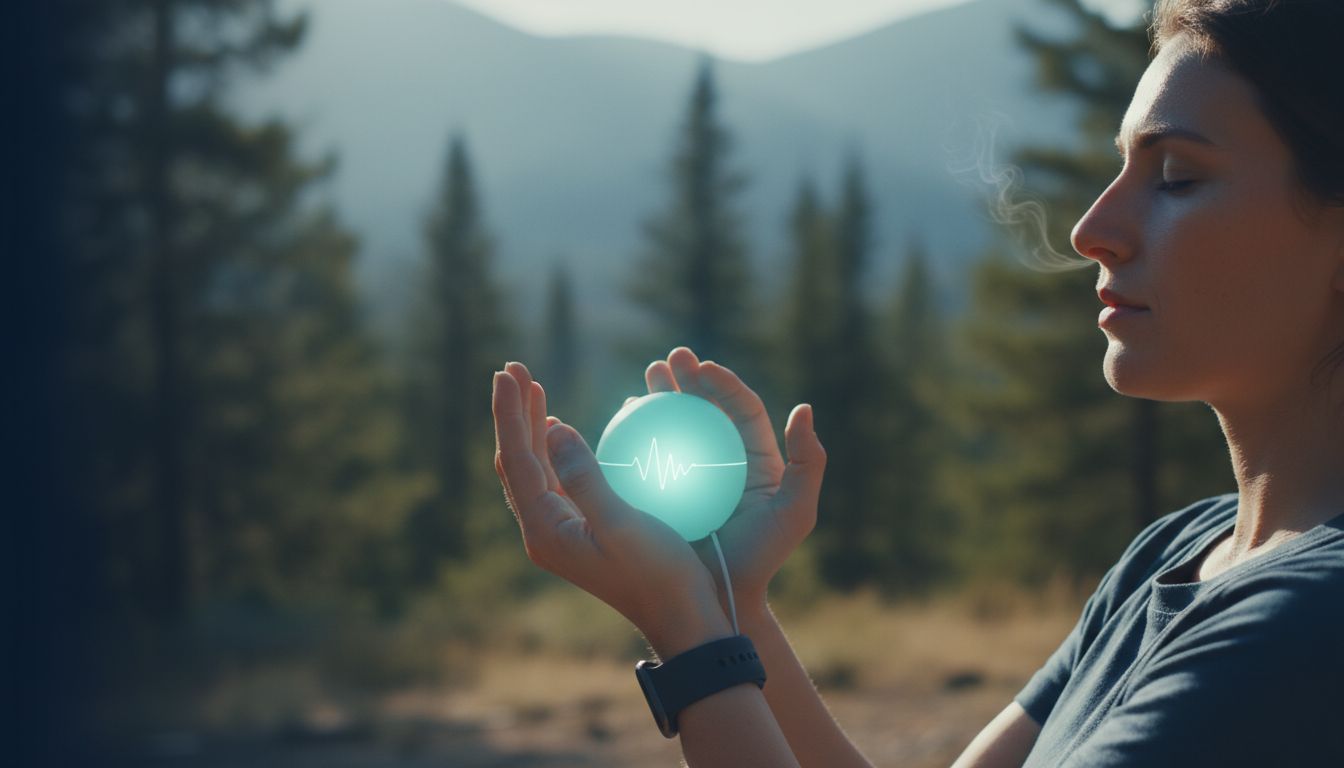

Stress care is changing in a very practical way. Instead of asking people to find 30 quiet minutes, recent research is pointing toward much smaller tools that fit real life: one-minute breathing breaks and wearable biofeedback. For busy adults juggling work, family, and mental load, that matters. The newer message is encouraging: stress support does not always have to be long, expensive, or complicated to be useful.
In 2025, multiple studies explored how brief slow breathing, smartphone-based biofeedback, smartwatch-guided programs, and wearable sensors can help people respond to stress in the moment. The most exciting part is not that these tools are perfect. It is that they are becoming easier to use, easier to access, and more grounded in day-to-day habits. That makes wearable biofeedback for stress an increasingly interesting option for anyone looking for simple, actionable self-care.
Why tiny stress interventions are getting attention
For years, stress management advice often centered on long meditation sessions, full yoga classes, or detailed wellness routines. Those approaches can absolutely help, but they can also feel unrealistic when your calendar is packed. That is why researchers are now paying closer attention to “micro-break” interventions: very short practices that can be used between meetings, during a commute pause, or before a difficult conversation.
A 2025 study in college students found that brief slow-paced breathing with a longer exhale improved working memory, mood, and perceived stress. That is a big deal because it suggests that even a very short breathing break may have measurable emotional and cognitive benefits. In other words, a minute of guided breathing is no longer just wellness advice floating around on social media; it is becoming part of a more evidence-based conversation.
This shift also reflects a wider trend in health behavior. People are more likely to stick with routines that feel doable. A one-minute breathing exercise or a two-minute wearable-guided reset is easier to repeat than a complicated stress program. When something is easy to start, it has a better chance of becoming a lasting habit.
How one-minute breath breaks may help the and mind
Slow breathing works partly because it speaks directly to the nervous system. A 2023 systematic review and guideline paper described heart rate variability biofeedback, or HRVB, as breathing-centered autonomic training. The idea is that breathing at the right pace can stimulate respiratory sinus arrhythmia and the baroreflex, both of which are involved in how the regulates itself.
A 2025 review in Acta Neurologica Belgica also described slow breathing and HRV biofeedback together as non-invasive autonomic regulation tools. In plain English, that means these practices may help the shift away from a more activated stress state and toward a more regulated one. This does not mean stress disappears instantly, but it may mean the becomes better at recovering from it.
It is also important to know that not all breathing exercises are the same. A 2025 comparative study looked at square breathing, 4-7-8 breathing, and 6-breaths-per-minute breathing, with different effects on HRV, carbon dioxide, and mood. That reinforces a helpful practical lesson: if one breathing method does not feel effective for you, another style may be a better fit.
What wearable biofeedback actually does
Wearable biofeedback goes a step beyond tracking. Instead of only telling you that your stress may be high, it can prompt you to do something about it in the moment. This might mean showing your heart rate pattern, guiding your breathing rhythm, vibrating gently to cue slower breaths, or pairing physiological signals with mindfulness exercises.
That shift from passive monitoring to active intervention is one of the biggest developments in 2025 research. A randomized controlled trial found that mindfulness-based stress reduction supported by smartwatch physiological signals improved mindfulness and reduced stress, even though it did not significantly improve anxiety or depression. That is a useful reminder that stress care tools can help in specific ways without being a cure-all.
Wearables are also becoming more flexible. Some approaches use a smartwatch, while others rely on a phone’s built-in sensors for heart-rate biofeedback. A 2025 three-arm randomized controlled trial evaluated a brief smartphone-based stress management intervention using built-in sensors, supporting the idea that biofeedback may become possible without extra hardware. For readers who want low-friction self-care, that is a very promising direction.
What the latest workplace studies suggest
Work stress remains one of the most common reasons people look for better self-care tools. That is why workplace research matters so much. In 2025, a non-randomized controlled trial in employees tested mobile HRV biofeedback for work-related stress and compared digital versus live instruction formats. The fact that remote delivery was part of the evidence base is especially relevant for today’s hybrid and remote work environments.
This matters because many people need support that fits into a lunch break, a desk routine, or a work-from-home day. If a stress intervention only works in a clinic or a classroom, it will not reach most people consistently. Mobile and wearable options may help bridge that gap by bringing practice into the environments where stress actually happens.
Wearables are even being tested in physicians as a burnout-prevention tool. A 2025 randomized clinical trial on smartwatch use in physicians measured burnout, resilience, quality of life, depressive symptoms, stress, and sleepiness. That tells us wearable stress care is no longer aimed only at wellness enthusiasts; it is increasingly being explored for professionals under intense strain.
Why the results are promising but not uniform
As exciting as these developments are, it is important to stay grounded. A 2025 systematic review and meta-analysis covering 18 studies and 1,352 participants found medium effects for reducing depressive symptoms and increasing HRV with remote HRV biofeedback. However, the pooled effect for stress was not significant overall. That does not mean the tools do not work; it means the results are more nuanced than the marketing often suggests.
One major reason may be protocol design. The same meta-analysis reported that better outcomes were linked with factors such as maximizing resonance, keeping the screen on, having fewer lab visits, and limiting daily practice to less than 20 minutes. This is encouraging because it suggests results may improve when interventions are designed around how people actually use them.
For everyday readers, the takeaway is simple: details matter. The breathing pace, the instruction style, the practice length, and the type of feedback can all shape the results. If a wearable or breathing app does not help much at first, that may reflect the protocol rather than your ability to benefit from stress-management tools.
How devices are evolving beyond simple wellness gadgets
Another important change is that wearables are becoming data platforms as well as personal tools. A 2025 paper introduced the “Stress in action wearables database,” which compiles information on technical performance, reliability, validity, and usability for noninvasive wearable stress monitors. That kind of resource helps move the conversation from hype toward quality and comparison.
Researchers are also building more stress-specific datasets for machine learning. A 2025 data brief described a multi-modal wearable dataset for cognitive attention and task-based stress analysis, and another 2025 Scientific Data paper benchmarked wearable physiological signals under acute stress and exercise conditions. This work is important because it helps validate whether sensors are truly picking up stress-related changes in realistic settings.
For consumers, this means the next generation of stress wearables may become smarter and more personalized. Instead of simply saying, “You seem stressed,” future devices may become better at recognizing patterns, contexts, and response timing. That could make interventions feel less generic and more helpful in the exact moments they are needed.
What to look for if you want to try these tools
If you are curious about trying one-minute breath breaks or wearable biofeedback, start with simplicity. Look for a device or app that offers brief guided sessions, clear breathing cues, and easy-to-read feedback. You do not need an overly complicated dashboard to build a useful habit. In fact, lower-friction tools may be the most realistic choice for long-term use.
It is also worth paying attention to how the guidance feels. Some people prefer visual breath pacers on a screen, while others respond better to tactile breathing devices that vibrate gently. A 2025 mixed-methods study evaluated two tactile breathing devices in stressed individuals, looking at both physiological effects and user preferences. That is a good reminder that comfort and usability are not minor details; they can determine whether a tool becomes part of your routine.
Finally, think in terms of consistency rather than perfection. A short breathing break before opening your inbox, after a tense conversation, or during an afternoon energy slump may be more helpful than waiting for an ideal wellness window that never comes. Tiny practices are powerful partly because they are easier to repeat, and repeated support is often what stress care really needs.
The bigger picture for holistic stress care
Breathwork is also being tested in broader and more clinical contexts. In 2025, studies examined paced breathing in adults sustaining traumatic injury and breathing interventions in dysfunctional breathing, with findings related to autonomic function, respiratory efficiency, stress, and resilience. This suggests breathing-based tools are being taken seriously not just for relaxation, but for recovery and regulation.
That said, wearable biofeedback for stress works best when viewed as one part of a bigger self-care picture. Good sleep, movement, supportive relationships, balanced expectations, and realistic work boundaries still matter. A wearable can prompt a healthier response, but it cannot replace the foundations of physical and mental well-being.
The most empowering takeaway is that stress care is becoming more accessible. You may not need a perfect meditation practice or a huge block of free time to support your nervous system. A minute of slower breathing, guided by a phone or wearable, may be enough to create a small but meaningful reset that adds up over time.
Overall, the newest research points to a practical future for stress care: shorter interventions, more personalized feedback, and tools that fit into ordinary life. One-minute breath breaks and wearable biofeedback are not magic solutions, and the evidence is still mixed in some areas. But they are opening the door to stress support that feels more doable for real people with real schedules.
If you have been struggling to keep up with complicated wellness routines, this trend is good news. Start small, stay curious, and pay attention to what helps you feel calmer and more steady. Sometimes the best self-care is not the most dramatic habit, but the one you can actually use today.