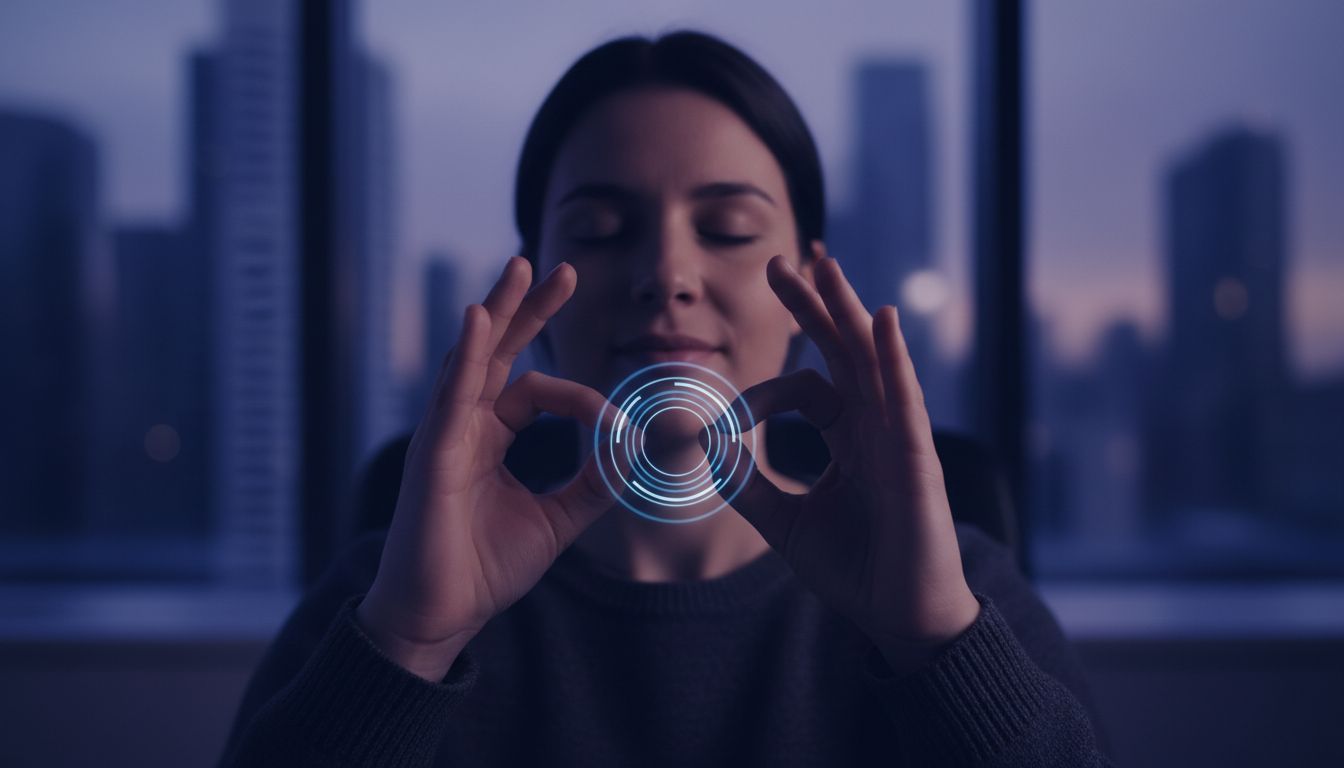

Modern workdays feel crowded in a very specific way: people are not just busy, they are mentally saturated. Microsoft’s 2025 Work Trend Index reports that 80% of employees and executives do not have the time or energy to meet rising expectations. In that kind of environment, long wellness routines often sound great in theory but fail in practice. Tiny, app-timed breathing pauses are gaining traction because they ask for very little while offering a realistic way to interrupt stress before it snowballs.
For busy teams, that practicality matters. A one- to five-minute breathing reset can fit between meetings, before a presentation, or during an afternoon slump without requiring special equipment, a quiet room, or a major shift in the calendar. That low-friction design is a big reason why app-timed breathing pauses are winning over busy teams: they are built for real schedules, not ideal ones.
Why the modern workplace is primed for tiny pauses
Workplace stress is not a niche problem. WHO materials continue to highlight high stress, burnout, absence, and unsafe conditions as major concerns, especially in demanding sectors. At the same time, many workers are juggling constant notifications, rapid task-switching, and pressure to stay responsive. In that setting, even helpful habits can be ignored if they feel too time-consuming.
That is exactly where tiny pauses shine. They do not compete with the rest of the day the way a 30-minute class or a full meditation session might. Instead, they slip into the cracks of a packed schedule. A short breathing session can happen before opening a difficult email, after a tense call, or right before starting focused work.
The rise of AI-heavy, high-pressure work may make these pauses even more appealing. As expectations rise and people feel increasingly maxed out, teams are looking for tools that can help in the moment, not just in theory. Tiny, app-timed breathing pauses match that need because they are immediate, structured, and easy to repeat.
What the research says about short breathing sessions
Recent evidence helps explain why these quick breathing breaks are more than a passing trend. A 2025 study published in Anxiety, Stress, & Coping found that brief slow-paced breathing improved working memory, mood, and stress in college students. While that study was not conducted in office teams specifically, the results are still relevant because they suggest that even small interventions can produce measurable cognitive and emotional benefits.
Another randomized study on acute breathing exercises found that a 5-minute breathing session could influence performance under psychological stress. In that research, slow breathing outperformed fast breathing on some executive-function measures. That is important for busy professionals because many difficult work moments are really moments of stress-loaded thinking: presentations, deadline decisions, conflict, and multitasking.
A 2025 randomized controlled trial also reported that breathing interventions improved perceived stress, respiratory rate, and autonomic function markers. Put simply, short guided breathing may help people feel better while also nudging the toward a calmer physiological state. This gives tiny breathing pauses more credibility than generic advice to “just relax.”
Why slow, guided breathing works better than vague advice
One reason app-based breathing is catching on is that it replaces fuzzy wellness advice with a clear structure. Telling someone to “take a breath” is easy to say but hard to apply when they are already overwhelmed. An app timer, by contrast, gives a start point, an end point, and a rhythm to follow. That removes decision fatigue and makes the action far more likely to happen.
Recent review work supports a practical rule for stress-reducing breathing interventions: avoid fast-only breathing, and use guided, repeated sessions that usually last at least 5 minutes. In other words, not all breathing methods are equal. The calming effect most often discussed in current literature comes from controlled slow breathing, not from speeding the breath up.
This is why the most practical rhythm cited in recent workplace materials is around 5 to 6 breaths per minute. This pace is often described as slow-paced or resonant breathing and is commonly recommended for stress regulation and recovery. For teams, that is useful because it turns a broad idea into a simple protocol people can actually follow.
Why apps make these pauses easier to stick with
App-timed breathing is designed for adherence, not aspiration. That distinction matters more than many people realize. A wellness tool does not help much if it is too ambitious for daily life. Breathing apps increasingly focus on short sessions, timers, reminders, and guided patterns because busy users are more likely to complete something that takes 60 to 300 seconds than a long routine that feels like another task.
This design also fits the logic of habit formation. When a pause is short, repeatable, and easy to start, it becomes less intimidating. A person may skip a long meditation because they cannot find the perfect moment, but they are much more likely to accept a two-minute breathing prompt before a meeting or after lunch. Consistency often beats intensity when it comes to self-care.
Some recent app ecosystems are also explicitly targeting workplace stress instead of general meditation. They market guided breathing around reducing anxiety, easing pressure, and creating short structured resets. For professionals who do not identify with the broader mindfulness world, that practical positioning can feel more accessible and less abstract.
Why busy teams adopt tiny pauses more easily than bigger wellness programs
A major strength of the tiny-pause model is social ease. A manager can invite a team to take a 60-second breathing pause at the start of a meeting without derailing the agenda. That is much easier to normalize than asking everyone to join a long workshop or adopt a complex wellness challenge. Small practices spread more easily because they create less resistance.
There is also a business case behind that simplicity. A 2026 workplace-focused guide describes breathwork as a low-cost, scalable form of workplace hygiene. That framing helps explain why organizations may prefer it over interventions that require more money, more training, or more schedule coordination. A breathing timer can be standardized across teams with very little friction.
Micro-break logic supports this approach as well. Recent workplace writing on micro-breaks suggests that even one- to five-minute pauses can reduce stress and improve focus. Breathing timers sit neatly inside that niche. They offer a concrete, repeatable kind of micro-break that is easy to measure, prompt, and encourage across a group.
How breathing breaks may support focus during hectic days
Many workers do not lose focus because they lack motivation. They lose it because stress and mental fatigue build up in layers throughout the day. Notification-heavy work can keep the nervous system slightly activated for hours at a time. Tiny breathing pauses may help by interrupting that buildup early, before it turns into irritability, scattered thinking, or total mental exhaustion.
That is one reason workplace-focused articles and research summaries increasingly describe brief paced breathing as a reset for attention, mood, and mental fatigue. A short pause will not solve every workload problem, but it can create a transition point. It gives the mind a moment to slow down instead of carrying tension from one task straight into the next.
For many teams, this matters most before cognitively demanding work. A brief slow-breathing session before deep work, a difficult conversation, or a deadline review may help people feel more settled and mentally organized. The value is not that it transforms the whole day instantly. The value is that it can improve the next 10 or 20 minutes, which is often enough to make a real difference.
How to use tiny, app-timed breathing pauses in a practical way
If you want to try this approach, keep it simple. Choose a breathing app or timer that offers guided slow breathing, ideally around 5 to 6 breaths per minute. Start with a one- to five-minute session, and use it at predictable pressure points: before meetings, after stressful conversations, during an afternoon dip, or before focused work blocks.
It also helps to avoid overcomplicating the habit. You do not need the perfect setting, and you do not need to wait until you feel extremely stressed. Tiny pauses work best when they are used early and often enough to prevent stress from compounding. A short, guided reset is usually more practical than waiting until your nerves are already overloaded.
Teams can make adoption easier by building these pauses into existing routines. For example, a team lead might open a weekly check-in with one minute of guided breathing, or encourage a two-minute reset between back-to-back meetings. Because the time cost is so low, the practice feels manageable rather than disruptive, which is a big part of why it sticks.
Tiny, app-timed breathing pauses are winning over busy teams because they meet people where they actually are: overloaded, time-poor, and in need of something simple that works. Research increasingly supports the value of brief slow-paced breathing for stress, mood, and certain aspects of cognitive performance, while workplace trends show a growing appetite for tools that fit into real schedules.
If you are looking for a practical self-care habit that does not demand a major lifestyle overhaul, this is one of the easiest places to start. A short guided breathing pause is not a magic fix, but it can be a useful daily support for calm, focus, and resilience. And for many busy teams, that combination of small effort and real-world usefulness is exactly why the habit keeps catching on.