
Plant-based remedies can feel appealing because they seem simple, traditional, and close to nature. But when you are shopping for herbal capsules, tinctures, powders, or teas, it is important to remember one key point: natural does not automatically mean safe. According to the National Center for Complementary and Integrative Health (NCCIH), many herbal supplements have not been well tested, and some products sold as dietary supplements may not contain exactly what the label suggests.
That is why learning how to verify plant-based remedies is such a useful self-care skill. In the United States, dietary supplements generally are not pre-approved by the FDA for safety or effectiveness before they are sold, so consumers need practical ways to screen products for quality and safety. The good news is that you do not need a science degree to make smarter choices. A few simple checks can help you spot better products and avoid major red flags.
Start by understanding what kind of product you are buying
The first step is to check whether the remedy is being sold as a dietary supplement. Many herbal products fall into this category, which matters because supplements are regulated differently from prescription drugs. They do not go through the same pre-market approval process for safety and effectiveness, so the label alone should never be treated as proof that a product works or is risk-free.
This regulatory gap is exactly why verification matters so much. If the FDA is not reviewing most supplements before they reach store shelves, then quality checks from reputable labs and third-party organizations become much more important. A nice-looking package, trendy branding, or wellness buzzwords are not enough. You want signs that some has actually tested the contents.
It also helps to reset expectations. A plant-based remedy may support wellness, but it should not be marketed like a miracle drug. If a product promises dramatic, immediate effects, that is your cue to slow down and investigate further. A trustworthy supplement usually presents realistic information, clear labeling, and a transparent company profile.
Know what a good lab test should actually verify
When people ask how to verify plant-based remedies, the core answer is this: look for evidence of identity, purity, and potency testing. Identity testing helps confirm that the plant species in the bottle is the same one named on the label. This matters because species substitution can happen, and recent FDA enforcement has shown how dangerous that can be when products labeled as botanical ingredients were actually adulterated with toxic yellow oleander.
Purity testing focuses on whether the product is contaminated. For plant-based remedies, useful screening should include heavy metals, microbes, pesticides, and other toxins. USP has emphasized that some supplements may contain harmful contaminants, and NCCIH also highlights contamination as one of the main safety concerns with supplements. If a company talks about quality but never explains contaminant testing, that is not very reassuring.
Potency testing looks at whether the expected active constituents are present at the right levels. In practical terms, this means the product should contain the listed ingredients in the stated amounts rather than random or inconsistent doses. Without potency testing, you cannot be confident that two bottles of the same remedy will provide the same amount of the herb or the same level of active compounds.
Use third-party certifications wisely
Third-party verification seals can be one of the easiest shortcuts for evaluating supplement quality. A seal such as USP Verified can indicate that the product contains the ingredients listed on the label, in the declared potency and amounts, and does not contain harmful levels of specified contaminants. That is a strong quality signal, especially if you do not have access to raw testing data.
At the same time, it is important to use certifications correctly. A quality seal is not proof that a remedy will cure a health problem or deliver a specific medical benefit. It is better to think of it as a manufacturing and quality-control checkpoint. In other words, it helps answer the question, “Is this product likely to match its label?” rather than “Will this definitely work for me?”
If you see a certification logo, take an extra moment to verify that it is real and current. Some questionable sellers use official-looking symbols or even misuse FDA-related imagery to appear more trustworthy. FDA guidance on tainted products warns consumers to be cautious with vague company information, missing contact details, or misleading use of government-style logos. Real transparency usually includes a clear manufacturer name, address, and customer support contact.
Ask for proof beyond the label
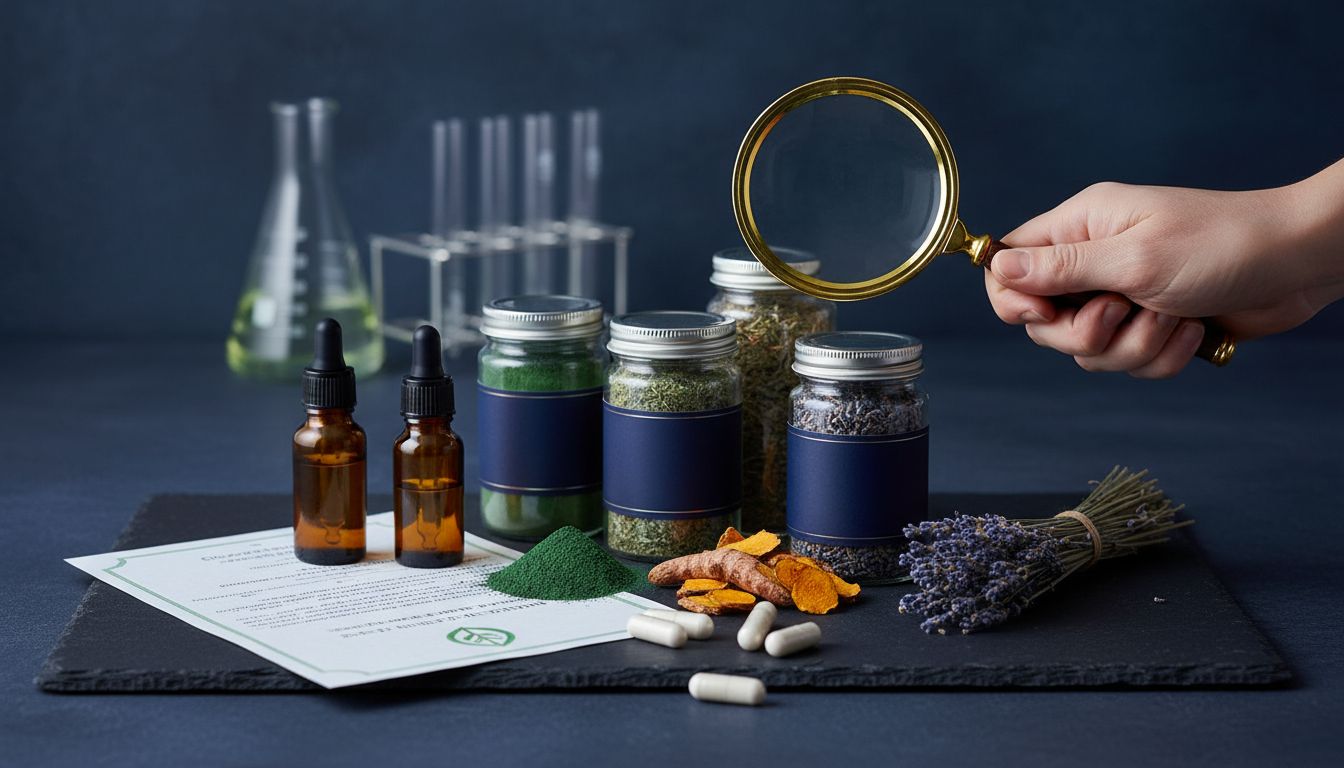
One of the most practical ways to verify plant-based remedies is to look for a certificate of analysis, often called a COA. A COA can show whether a batch was tested for identity, potency, and contaminants. While not every consumer will want to read a full lab report, even seeing that a company provides batch-specific testing information is a useful sign of transparency.
The best companies make this information fairly easy to find. Sometimes it is linked on the product page, printed as a QR code on the bottle, or available through customer service. If a brand claims “lab tested” but gives no details about what was tested, who performed the test, or whether the results apply to the batch you are buying, treat that claim cautiously.
It is also smart to check whether testing includes hidden pharmaceuticals and adulterants. NCCIH warns that some supplements, especially those marketed for weight loss, sexual health, and building, have contained undeclared prescription drugs or other compounds. A product can pass a basic herb identity test and still be unsafe if it has been spiked with hidden ingredients to create stronger effects.
Recognize the biggest safety red flags
Some warning signs deserve immediate skepticism. The FDA’s 2025 guidance on tainted supplements highlights categories such as sexual enhancement, weight loss, building, pain relief, diabetes support, and sleep aids as higher-risk areas. If a plant-based product falls into one of these categories, you should raise your standards and investigate it more carefully before buying.
Be especially cautious with dramatic marketing language. Claims like “works instantly,” “better than prescription drugs,” “replaces your medication,” or “miracle breakthrough” are classic red flags. FDA warning materials repeatedly note that products promising immediate or drug-like effects are more likely to be adulterated or misleadingly marketed.
Other red flags include incomplete company information, no physical address, poor labeling, fake reviews, and misuse of terms that sound official. If a seller cannot clearly tell you what is in the product, how it was tested, where it was made, and how to contact them, that is a good reason to walk away. Reliable brands usually make basic safety and manufacturing details easy to find.
Why botanical identity testing matters more than most people think
Many people assume that if the label lists a plant, the bottle must contain that exact plant. Unfortunately, that is not always true. Species substitution is a real safety issue, and recent FDA alerts showed that some products marketed as tejocote root or Brazil seed were actually adulterated with toxic yellow oleander, a plant that can cause severe or even fatal effects.
This is why identity testing should never be treated as a minor technical detail. A good manufacturer should be able to verify the botanical species used in the product, not just the general idea of an herb. Similar-sounding plant names, imported raw materials, and weak supply-chain controls can all increase the risk of substitution or adulteration.
It is also worth remembering that FDA updates on these issues can continue over time. The yellow oleander alert was updated again in November 2025 with additional products, which shows that contaminated or substituted botanical supplements can remain on the market across months and multiple listings. That makes ongoing vigilance much more important than a one-time glance at marketing claims.
Check interactions, warnings, and recall history
Even a product that passes lab testing can still be a poor choice for your situation. Drug interactions are one of the biggest safety concerns with herbal remedies. NCCIH specifically points to St. John’s wort as an herb that can interact with antidepressants and interfere with their intended effects. So verification is not only about what is in the bottle, but also about whether the product is appropriate for you.
Certain groups need extra caution. Pregnant women, nursing mothers, and children are often underrepresented in supplement safety research, according to NCCIH. If you fall into one of these groups, it is especially wise to talk with a qualified healthcare professional before using a plant-based remedy, even if the product looks high quality on paper.
Before buying, check for recalls, safety alerts, and advisories. NCCIH and FDA both encourage consumers to review warning resources and report adverse effects through FDA MedWatch. You can also use the FDA Dietary Supplement Ingredient Directory to see whether the agency has taken action or issued concerns about a specific ingredient. A quick search can reveal problems that are not obvious from the label.
A simple checklist for smarter buying decisions
If you want a practical routine, keep a short checklist in mind whenever you shop. First, confirm that the brand identifies the exact herb and appears to use proper identity testing. Second, look for contaminant screening that covers heavy metals, microbes, pesticides, and other toxins. Third, check for potency information so you know the stated ingredients are present in meaningful and consistent amounts.
Next, look for added trust signals such as a certificate of analysis, batch testing details, and a recognized third-party seal like USP Verified. Then review the product page and label for red flags: miracle language, instant results, prescription-like promises, missing company information, or suspiciously broad health claims. If the product sits in one of the FDA’s high-risk categories, take even more care.
Finally, search for the brand or ingredient alongside terms like “recall,” “warning,” “FDA,” or “MedWatch.” This quick step can help you catch recent alerts, adulteration problems, or ingredient concerns. In everyday life, learning how to verify plant-based remedies really comes down to combining common sense with a few evidence-based checks. That small effort can make your wellness routine much safer and more confident.
Plant-based remedies can absolutely have a place in a balanced wellness routine, but they deserve the same thoughtful screening you would give any other health product. The safest approach is not to assume that “herbal” means harmless. Instead, look for identity, purity, and potency testing, value third-party verification, and stay alert to warning signs that suggest a product may be misleading or contaminated.
If you remember one takeaway, let it be this: trust transparency more than hype. Brands that openly share testing, quality controls, and safety information are usually much easier to evaluate than products built around bold promises. With a practical checklist and a little patience, you can make better choices, protect your health, and feel more confident about the plant-based remedies you bring into your routine.